Wheeled vs Tracked Skid Steer Loader: Which Is Better for Australian Conditions?
Choosing between a traditional wheeled skid steer and a compact track loader comes down to where the machine will work. Compare ground conditions, traction, travel speed, maintenance, fuel use, transport, attachments and long-term ownership costs before deciding.
Browse UHI Skid SteersWheeled Skid Steer vs Compact Track Loader
Neither machine is universally better. Wheeled skid steers generally suit hard surfaces and lower-cost operation, while compact track loaders provide stronger traction, flotation and soft-ground performance.
| Feature | Wheeled Skid Steer | Compact Track Loader |
|---|---|---|
| Initial Purchase Price | Generally lower | Generally higher |
| Maintenance Cost | Generally lower | Generally higher |
| Travel Speed | Faster | Slightly slower |
| Hard Surface Performance | Excellent | Very good |
| Soft Ground Performance | Good | Excellent |
| Turf Protection | Moderate | Excellent |
| Fuel Consumption | Generally lower | May be slightly higher |
| Traction | Good | Excellent |
| Ground Pressure | Higher | Lower |
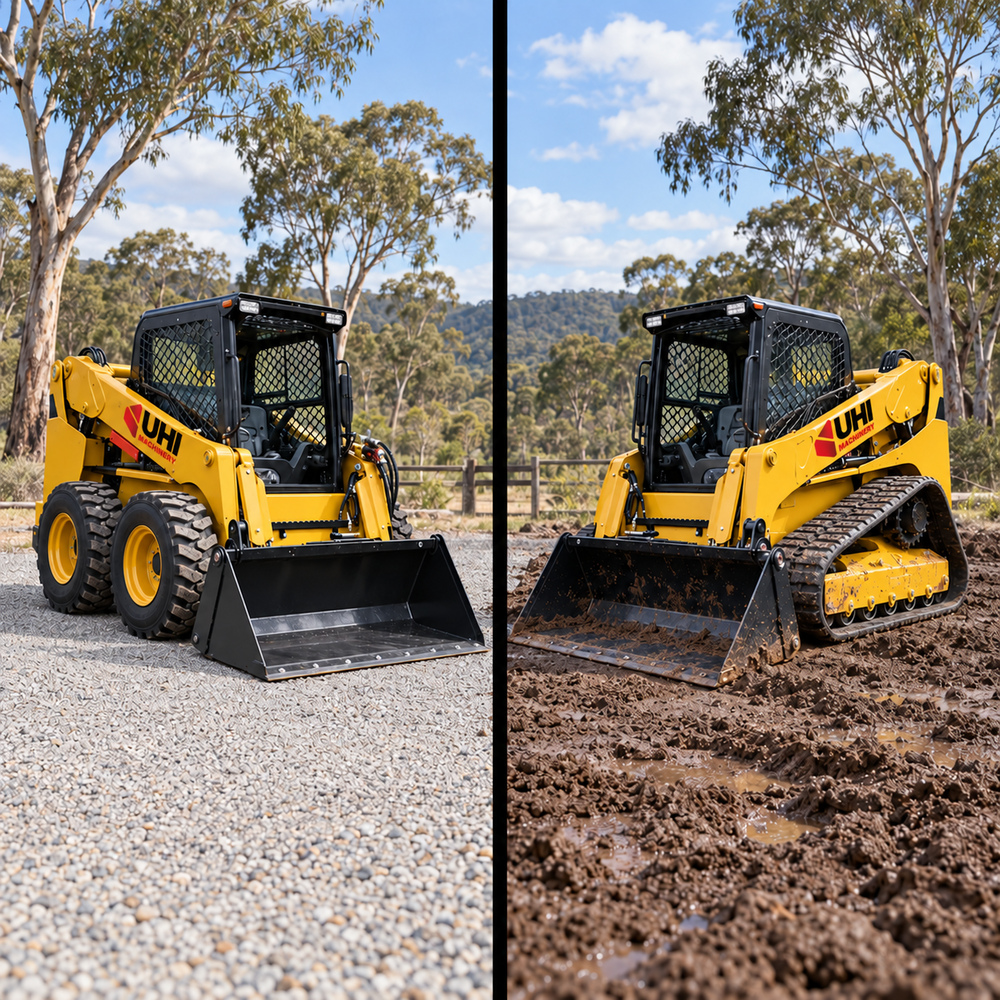
The biggest difference between a wheeled skid steer and a compact track loader is underneath the machine.
A wheeled skid steer uses four tyres, while a compact track loader replaces the tyres with a rubber track undercarriage that distributes the machine's weight across a much larger area.
That one design difference can significantly change traction, ground pressure, travel speed, maintenance requirements and how the machine performs across Australian worksites.
Tyres vs Rubber Tracks
Both machines can perform similar jobs and use many of the same attachments, but the undercarriage changes how each machine interacts with the ground.
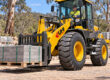
Four-Tyre Undercarriage
Wheeled skid steers are well suited to hard surfaces where travel speed, lower maintenance costs and manoeuvrability are priorities.
- Concrete
- Asphalt
- Compacted gravel
- Warehouses
- Industrial yards
- Residential developments
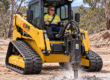
Rubber Track Undercarriage
A tracked undercarriage distributes machine weight across a larger surface area, improving traction and flotation on less stable ground.
- Mud
- Sand
- Wet soil
- Clay
- Loose fill
- Slopes and uneven terrain
Where Will the Machine Spend Most of Its Time?
Australian conditions vary significantly, so the surface under the machine should be one of your first considerations.
Mostly Hard Surfaces
If your machine spends most of its working life on concrete, asphalt, compacted gravel or industrial yards, a wheeled skid steer can provide strong value.
- Good traction on firm ground
- Higher travel speed
- Lower undercarriage cost
- Easier tyre replacement
Mostly Soft or Unstable Ground
When wet paddocks, mud, sand or unstable ground form a regular part of the workload, tracks can improve machine performance.
- Improved traction
- Better flotation
- Lower ground pressure
- Greater stability
Why Tracks Perform Better on Soft Ground
Rubber tracks create a larger contact area with the ground, helping the machine maintain traction while reducing ground pressure.
More Ground Contact
Tracks spread the machine's weight across a larger footprint, helping improve traction in wet, loose or muddy conditions.
Better Flotation
Lower ground pressure can help the loader stay on top of softer surfaces rather than sinking or creating excessive wheel spin.
Less Surface Disturbance
Lower ground pressure can help reduce turf damage and soil disturbance on suitable landscaped surfaces.
Compare Travel Speed and Maintenance Costs
Travel Speed
Wheeled skid steers generally travel faster between work locations, which can be useful on larger construction sites, industrial facilities and warehouses.
Compact track loaders exchange some travel speed for improved traction and stability.
Maintenance
Tyres are generally simpler and less expensive to replace than a full track undercarriage.
Track systems include additional wear components such as:
- Rubber tracks
- Rollers
- Idlers
- Drive sprockets
- Tension systems
Fuel Use
Compact track loaders are generally heavier than comparable wheeled machines and may consume slightly more fuel under similar conditions.
However, additional fuel cost may be offset if improved traction allows the machine to continue working in conditions where a wheeled machine would lose productivity.
Transport
The additional operating weight of a tracked machine can affect transport planning.
- Trailer selection
- Tow vehicle capacity
- Transport fuel consumption
- Applicable towing requirements
Wheels or Tracks Don't Determine Every Attachment Decision
Both machine types can operate a wide range of attachments. For demanding hydraulic attachments, hydraulic flow and auxiliary circuit performance are often more important than whether the machine runs on tyres or tracks.
Which Machine Works Better for Different Buyers?
It Depends on the Property
Farms dominated by hard yards, sheds and gravel roads may benefit from a wheeled skid steer, particularly for loading feed, handling pallets and moving materials.
Farms in wetter regions or those frequently operating across soft paddocks may benefit from the additional traction offered by tracks.
Tracks Often Have an Advantage
Landscapers frequently work on established lawns and residential properties where reducing ground disturbance is important.
Better flotation, lower ground pressure and improved wet-ground performance can make tracked machines attractive for this work.
Match the Undercarriage to the Site
Wheeled skid steers suit many subdivision, warehouse and urban construction projects where surfaces are firm.
Track loaders may be more suitable for earthworks, site preparation and projects involving unstable or softer ground.
Choose the Machine That Matches Your Conditions
Instead of asking which design is universally better, compare where your machine spends most of its working life.
Hard Surfaces and Lower Costs Are the Priority
- You operate mainly on hard surfaces
- You want a lower initial purchase cost
- Lower maintenance expense is important
- You transport the machine frequently
- You value higher travel speed
- Concrete, asphalt or gravel dominate your workload
Traction and Soft-Ground Performance Are the Priority
- You regularly work in mud or sand
- Maximum traction is important
- You work on finished landscaping
- You operate on slopes
- You frequently encounter soft ground
- Wet-weather productivity is important
Which Is Better: Wheeled or Tracked?
There is no universal winner. The right choice is the machine that better matches your business, site conditions and operating costs.
Wheeled skid steers can offer strong value where surfaces are hard and transport, speed and lower maintenance costs matter. Compact track loaders become more attractive where traction, flotation and soft-ground productivity are the priorities.
Whichever undercarriage you choose, hydraulic performance, lifting capability, attachment compatibility, local parts support and after-sales service remain important parts of the buying decision.
Wheeled vs Tracked Skid Steer FAQs
Are tracked skid steers worth the extra cost?
If your work regularly involves soft ground, mud or landscaping, improved traction and lower ground pressure may justify the higher purchase and maintenance costs.
Are wheeled skid steers cheaper to maintain?
Generally, wheeled machines have fewer undercarriage components and tyres are typically simpler and less expensive to replace than a rubber track system.
Which machine is better for Australian farms?
It depends on the terrain. Hard yards and gravel roads may favour a wheeled skid steer, while wetter regions and soft paddocks can make a tracked loader more practical.
Which machine causes less damage to grass?
Compact track loaders generally distribute machine weight over a larger surface area, which can reduce ground pressure and surface disturbance on suitable lawns and landscaped areas.
Which machine offers better resale value?
Resale value depends on machine condition, operating hours, maintenance history and local market demand. Both wheeled and tracked machines can retain value when properly maintained.
Need Help Choosing a Skid Steer for Australian Conditions?
Tell the UHI Machinery team where you work, the ground conditions you encounter, your attachments and lifting requirements. We can help you compare skid steer options for your application.