Top 10 Excavator Attachments Every Australian Business Should Own
Modern excavators can do far more than dig foundations or load trucks. With the right attachments, one machine can support demolition, landscaping, drilling, forestry, trenching, material handling and civil construction work while helping improve machine utilisation.
Browse UHI ExcavatorsWhich Excavator Attachments Are Most Useful?
A General Purpose Bucket and Hydraulic Quick Hitch provide a practical starting point for many Australian businesses. From there, attachments such as a Hydraulic Hammer, Auger, Tilting Bucket and Grapple can be added around the work performed most often.
Modern excavators are increasingly used as multi-purpose machines across Australian construction, agriculture, landscaping and civil projects.
By changing attachments, an excavator can move between digging, demolition, drilling, compaction, material handling and finishing work without requiring a separate machine for every task.
The best attachment is not necessarily the most expensive one. It is the attachment that matches the work performed every week and generates regular productive use.
Match Every Attachment to the Machine and the Work
Before purchasing, compare machine size, operating weight, hydraulic performance, quick hitch compatibility and local parts support.
Hydraulic Performance
Powered attachments should be matched to the excavator's available hydraulic flow and pressure.
Attachment Weight
Attachment weight should suit the excavator's operating weight and intended application.
Quick Hitch Compatibility
Confirm the attachment and hitch system are compatible before purchase.
Productive Attachments for Australian Businesses
These attachments cover common excavation, demolition, landscaping, utility, forestry, recycling and civil construction applications.
General Purpose Bucket
The most frequently used excavator attachment for everyday digging and earthmoving work.
- Excavation
- Trenching
- Loading
- General earthmoving
Hydraulic Quick Hitch
A productivity-focused upgrade that allows operators to change compatible attachments more quickly.
Reducing attachment-change downtime can make a significant difference when the excavator performs several jobs during the same day.
Hydraulic Hammer
A powered attachment for demolition and hard-material breaking work.
- Concrete
- Rock
- Asphalt
- Civil construction
- Demolition projects
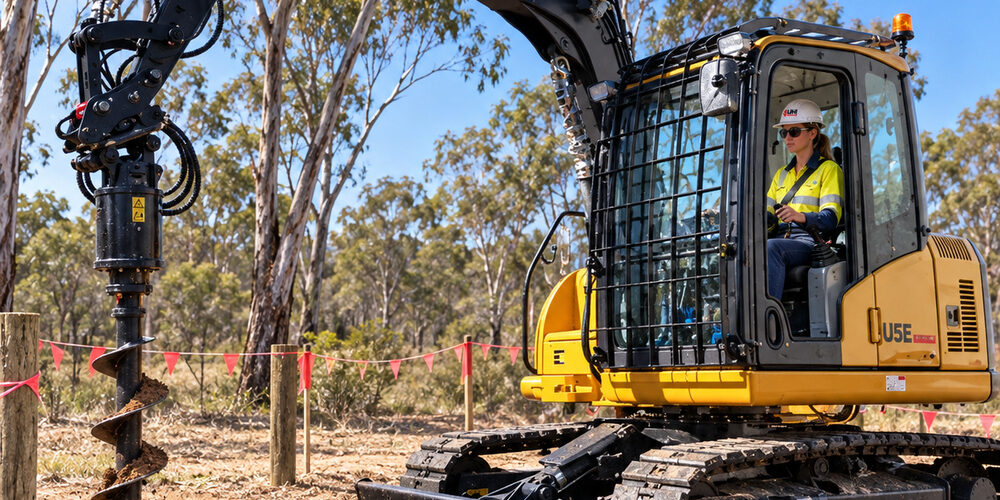
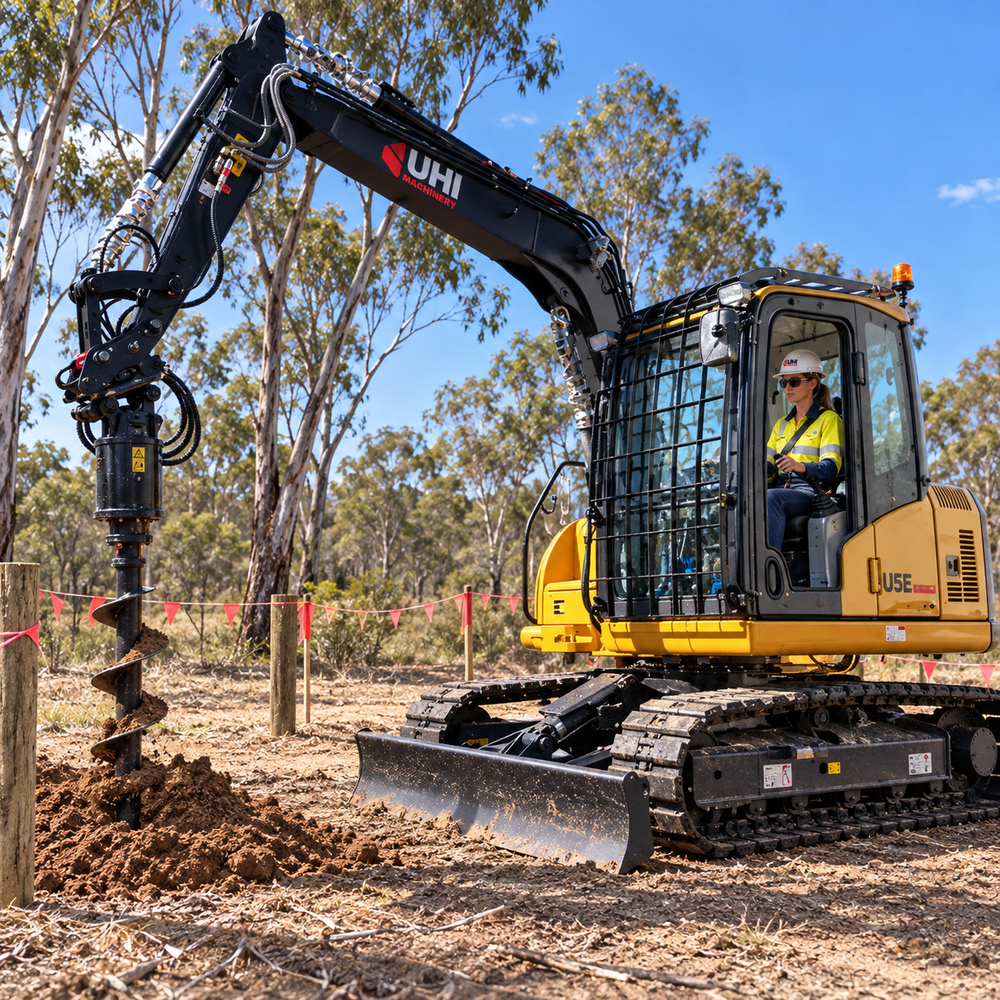
Hydraulic Auger
A useful attachment for repetitive drilling work across construction, farming and landscaping.
- Fencing
- Tree planting
- Retaining walls
- Foundation drilling
Tilting Bucket
Adds extra finishing flexibility without requiring the excavator to be repositioned as often.
- Batter work
- Drainage
- Finishing
- Landscaping
Ripper
Designed to loosen difficult material before digging with a bucket.
- Compacted ground
- Shale
- Tree roots
- Hard excavation conditions
Hydraulic Grapple
Useful for handling bulky and irregular materials that are difficult to manage with a standard bucket.
- Timber
- Demolition waste
- Rocks
- Bulky materials
Compaction Wheel
Designed to improve trench compaction in utility, drainage and pipeline projects.
- Utility trenches
- Pipeline work
- Backfill compaction
- Civil projects
Mechanical Grab
A practical attachment for material-handling applications where mechanical gripping is suitable.
- Logs
- Scrap materials
- Green waste
- Forestry applications
- Recycling applications
Screening Bucket
Allows suitable material to be separated directly at the worksite.
- Soil separation
- Rock separation
- Recyclable material sorting
- Waste reduction
Build the Excavator Attachment Fleet in Stages
A staged approach allows each attachment to earn measurable value before more specialised tools are added.
Core Excavation Package
- General Purpose Bucket
- Hydraulic Quick Hitch
- Hydraulic Hammer
Drilling & Finishing Package
- Hydraulic Auger
- Tilting Bucket
- Ripper
Material Handling & Civil Package
- Hydraulic Grapple
- Compaction Wheel
- Mechanical Grab
- Screening Bucket
What Should You Check Before Buying an Excavator Attachment?
Match attachment weight to the excavator's operating weight and intended application.
Confirm the hydraulic requirements of powered attachments before purchase.
A suitable quick hitch can reduce attachment-change time throughout the working day.
Choose commercial attachments with serviceable wear components where appropriate.
Reliable technical support and spare-parts availability can improve long-term ownership value.
The Right Excavator Attachments Can Expand One Machine Into Multiple Jobs
A strong attachment package allows an excavator to move beyond standard digging work and contribute to demolition, drilling, finishing, compaction and material handling.
Start with high-use attachments such as a General Purpose Bucket and Hydraulic Quick Hitch, then add specialised tools when the workload justifies the investment.
Excavator Attachment FAQs
Which excavator attachment should I buy first?
A General Purpose Bucket and Hydraulic Quick Hitch provide a strong starting point for many businesses because they support everyday excavation and faster attachment changes.
Is a Hydraulic Hammer worth the investment?
If demolition, concrete breaking or rock breaking forms a regular part of your workload, a Hydraulic Hammer can significantly improve productivity.
What is the benefit of a Tilting Bucket?
A Tilting Bucket can reduce machine repositioning and improve finishing work on batters, drains and landscaping applications.
Can one excavator replace multiple machines?
With suitable attachments, an excavator can dig, drill, compact, break concrete and handle different materials across multiple applications.
How do I choose the right excavator attachment?
Consider excavator size, hydraulic performance, attachment weight, quick hitch compatibility and the work your business performs most often.
Build a More Versatile Excavator Setup
Tell the UHI Machinery team about your machine size, hydraulic requirements and the work you perform. Compare UHI excavators and build an attachment setup around your construction, landscaping, agricultural or civil applications.