How to Choose the Right Mini Loader
Mini loaders combine compact dimensions, lifting performance and attachment versatility for Australian farms, landscaping businesses, construction sites and property owners. This guide explains what to compare before choosing a machine.
Browse UHI Mini LoadersWhat Should You Look for in a Mini Loader?
The right mini loader is not necessarily the largest or most powerful model. Start with the work you perform most often, then compare lifting capacity, width, hydraulics, articulation, attachments and support.
Mini loaders are increasingly used across Australian landscaping, farming, equestrian facilities, construction, councils, nurseries and property maintenance.
Their compact dimensions allow them to work in locations where larger equipment may not fit, while attachment compatibility allows one machine to complete a wide variety of jobs.
Choosing the right model requires more than comparing engine horsepower or purchase price. The machine needs to match the work, access, attachment requirements and long-term ownership needs.
Understand Your Primary Application
Before comparing specifications, identify the tasks your machine will perform most often.
Soil, Mulch & Paving Materials
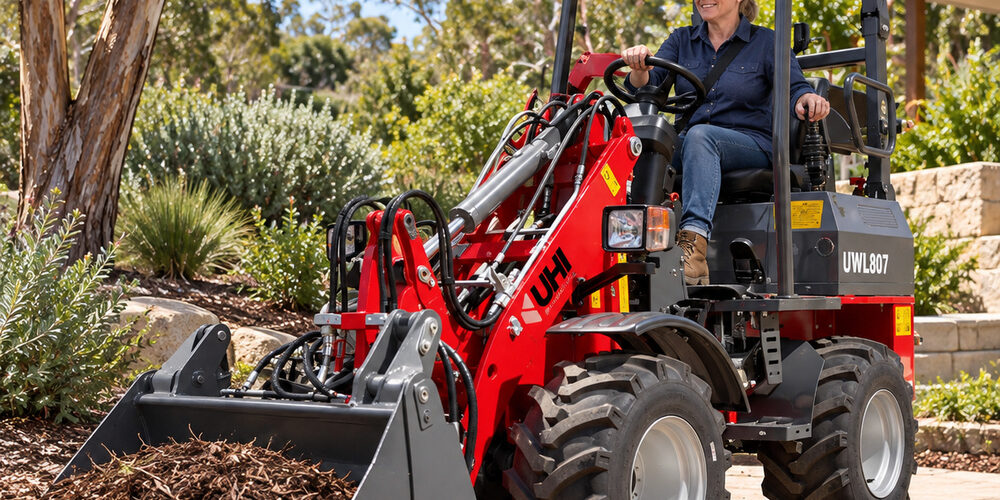
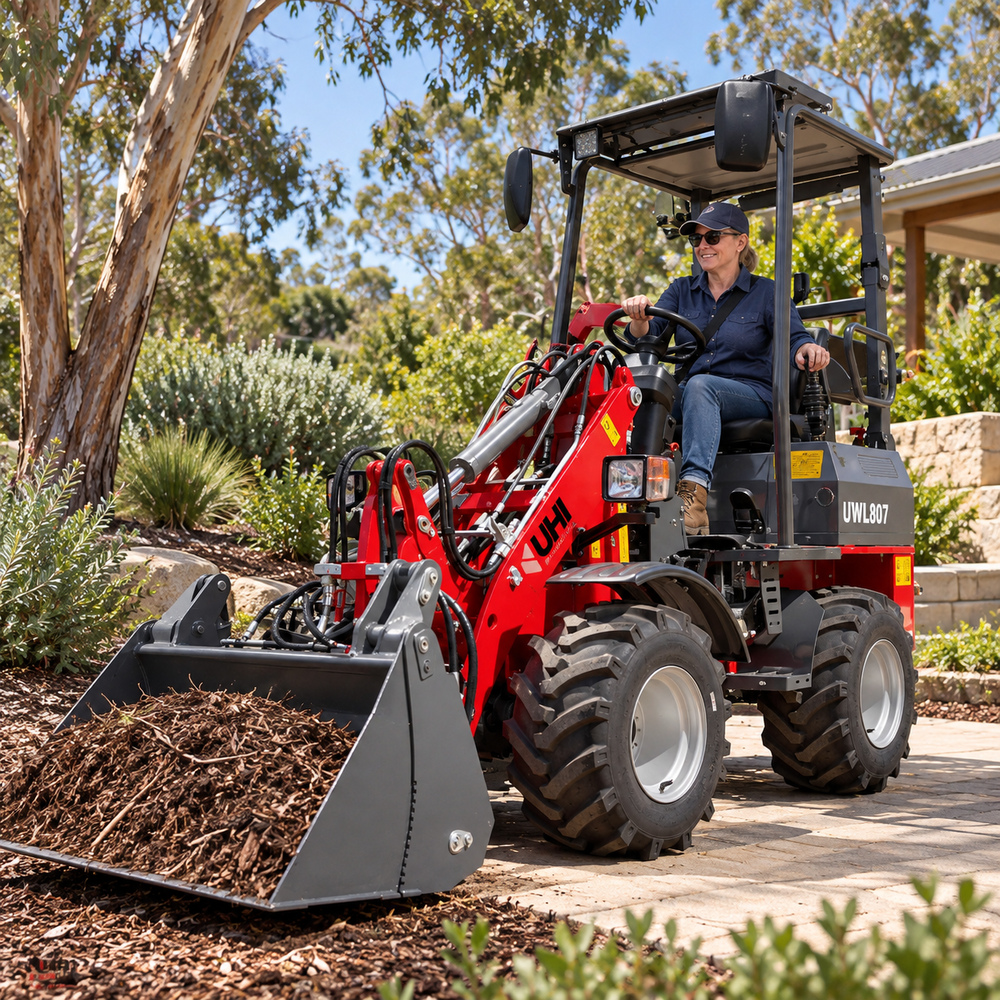
Landscapers frequently need a compact machine that can transport material while working through restricted residential access.
Feed, Hay & Pallet Handling
Farmers may use mini loaders for feed, fertiliser, hay, pallets and everyday property-maintenance tasks.
Stable Cleaning & Bedding
Horse-property owners can benefit from compact dimensions when cleaning stables and transporting bedding or feed.
Logs & Green Waste
Grapples and log grabs can make a mini loader useful for branches, logs and other irregular material.
Parks & Maintenance
Attachment versatility allows one compact machine to perform several maintenance jobs across parks and public spaces.
Material Handling
Builders may use buckets, pallet forks and other suitable attachments to move materials around restricted work areas.
Choose the Right Lift Capacity
Lift capacity is one of the most important specifications to compare because insufficient capacity can quickly limit how useful the machine is.
Identify Your Heaviest Regular Load
Think about what the machine will lift and carry during normal use.
- Pallets
- Bulk bags
- Round hay bales
- Feed and fertiliser
- Materials loaded into trailers or trucks
Avoid Oversizing the Machine
More capacity is not automatically better. Purchasing significantly more lifting capability than required can increase both purchase and operating costs.
Aim for a machine that comfortably handles your normal workload while still providing reasonable room for future growth.
Articulated Steering Makes a Difference
Mini articulated loaders pivot through a centre articulation joint instead of skidding the tyres through every turn.
Better Manoeuvrability
Centre articulation can provide a smaller turning radius for work around gardens, sheds, stables and narrow property areas.
Less Surface Disturbance
Because the tyres do not need to skid through every turn, articulated steering can reduce tyre wear and damage to suitable lawns and finished surfaces.
Smooth Load Carrying
Articulation geometry and machine balance can improve operator control while carrying material around the property.
Consider Machine Width Before You Buy
One of the main reasons buyers choose a mini loader is access, so width should be checked before finalising a model.
Measure Your Narrowest Access Point
Check the actual space the machine needs to pass through.
- Residential backyards
- Garden gates
- Horse stables
- Livestock sheds
- Greenhouses
- Vineyards
- Orchards
Avoid Expensive Access Modifications
A machine that comfortably fits through existing gates and buildings can be more practical than buying a larger loader and later modifying the site around it.
Engine Power Matters, but Hydraulics Matter Too
Engine horsepower is useful, but hydraulic performance often determines how effectively powered attachments operate.
Compare Auxiliary Hydraulic Capacity
Hydraulic flow becomes especially important when operating attachment-driven equipment.
- Augers
- Trenchers
- Sweepers
- Grapples
- Log splitters
- Rotary brooms
Look for a Balanced Machine
A practical combination of engine performance and hydraulic capability can deliver better real-world productivity than focusing on engine horsepower alone.
Think Beyond the Bucket
Attachment versatility is one of the biggest reasons businesses choose mini loaders.
Compare UHI Mini Loaders
Once you understand the lifting capacity, machine width, hydraulic performance and attachments your work requires, compare the available UHI mini loader range to find a machine that suits your application.
View UHI Mini Loaders for SaleOperator Comfort Should Not Be Overlooked
Operators who use the machine for several hours each day can benefit from controls and design features that reduce fatigue.
Controls
Look for ergonomic controls that are easy to understand and operate.
Seating
Adjustable seating position can improve comfort for different operators.
Visibility
Clear visibility helps operators position attachments and work around obstacles.
Entry & Access
Easy machine entry can make repeated daily access more convenient.
Hydrostatic Drive
Smooth hydrostatic operation can improve control during repetitive material-handling work.
Maintenance Access
Simple access to service points can make routine inspections and maintenance easier.
Stability Is More Important Than Speed
Mini articulated loaders often carry material across uneven farms, landscaping sites and construction areas, making machine balance an important part of the buying decision.
Machine Geometry
Consider wheelbase, articulation geometry and centre of gravity.
Counterweight & Load Distribution
Machine balance and counterweight design influence how the loader behaves when carrying heavy material.
Tyre Selection
Tyres should suit the surfaces and conditions where the machine spends most of its working time.
Compare Service Support and Total Ownership Cost
Purchase price is only one part of owning a mini loader.
Service & After-Sales Support
Before purchasing, ask how the machine will be supported.
- Are spare parts stocked locally?
- How long are typical parts delivery times?
- Is technical support available?
- Does the dealer provide servicing?
- What warranty is included?
Total Cost of Ownership
Include ongoing ownership costs when comparing machines.
- Scheduled servicing
- Fuel consumption
- Tyres
- Hydraulic oil
- Filters
- Replacement wear parts
- Attachment maintenance
- Resale value
Choose a Mini Loader That Can Handle Changing Environments
Australian machines may operate in coastal humidity, dry inland dust, grazing paddocks or commercial landscaping environments.
Reliable Hydraulics
Hydraulic performance should remain dependable across varied attachment work.
Strong Lifting Performance
Match lift capacity to your regular farm, landscaping or material handling workload.
Compact Dimensions
Access remains one of the major advantages of a mini loader.
Manoeuvrability
Articulated steering can improve control in restricted working areas.
Attachment Versatility
One machine can perform more jobs when compatible attachments are available.
Easy Servicing
Convenient maintenance access can simplify routine ownership.
Local Parts Support
Parts and technical support become especially important when the machine is relied on for everyday work.
Choose the Mini Loader Around the Work
Mini loaders combine versatility, manoeuvrability and productivity in a compact package.
Whether you are feeding livestock, landscaping residential properties, moving construction materials or maintaining acreage, the right machine should be selected around the jobs you actually perform.
Compare lifting capacity, hydraulic performance, machine dimensions, attachment options, operator comfort and long-term service support as a complete package.
The right machine is not necessarily the largest or most expensive. It is the one that suits your current workload while providing useful flexibility for future requirements.
Mini Loader Buying FAQs
What size mini loader is best for Australian farms?
Medium-capacity articulated loaders can provide a useful balance for feed, pallets and general property maintenance while remaining compact enough to work inside sheds and livestock facilities.
Are articulated mini loaders better than skid steer loaders?
Both have advantages. Articulated loaders generally create less ground disturbance and provide smoother steering, while skid steers may suit heavier construction and confined earthmoving applications.
Which mini loader attachments should I buy first?
Many buyers begin with a general-purpose bucket and pallet forks, then add attachments such as augers, grapples or trenchers as their workload expands.
How important is hydraulic flow on a mini loader?
Hydraulic performance becomes particularly important when using powered attachments. The machine's hydraulic capacity should be matched to the attachments you plan to operate.
Is a mini loader suitable for residential properties?
Compact dimensions, articulated steering and lower ground disturbance can make mini loaders useful for residential landscaping, acreage maintenance and backyard-access applications.
Find the Right UHI Mini Loader for Your Work
Compare your access, regular loads, hydraulic attachment requirements and operating environment before choosing a machine. Explore the UHI mini loader range or speak with our team about a machine and attachment setup that suits your application.