How to Choose the Right Skid Steer Loader in Australia
Choosing the right skid steer loader is about matching the machine to your actual workload. Compare operating capacity, hydraulic performance, wheels or tracks, lift path, attachments, operator comfort and local support before making your decision.
Browse UHI Skid SteersWhat Should You Look for When Buying a Skid Steer?
Bigger is not always better. Start with the work you perform every day, then compare the machine's lifting capacity, hydraulics, undercarriage, lift path and attachment compatibility.
A skid steer loader is one of the most versatile compact machines available for farms, landscaping businesses, construction sites and property maintenance.
The ability to operate multiple attachments means one machine can take on loading, digging, trenching, sweeping, pallet handling and other tasks throughout the year.
However, selecting the right machine is more important than simply choosing the largest or most powerful model available. The best skid steer is the one that matches your primary workload, site conditions and long-term requirements.
Understand Your Daily Work Requirements
Before comparing models or specifications, define what the machine will actually do most often.
Tight Residential Sites
Compact dimensions and manoeuvrability can be especially important when working around homes, fences and narrow access points.
Lifting & Material Handling
Farmers may prioritise hay handling, feed loading, pallets and a machine that can perform varied property-maintenance jobs.
Hydraulic Attachment Work
Civil and construction applications may require stronger hydraulic performance for specialised attachments and continuous operation.
Multi-Purpose Use
Acreage owners often benefit from one machine that can handle multiple maintenance and material-handling jobs throughout the year.
Choose the Right Skid Steer Size
A machine that is too small can struggle with heavier lifting or demanding attachments, while an oversized machine can increase transport, fuel and maintenance costs.
Rated Operating Capacity
Rated Operating Capacity, or ROC, helps indicate how much load the machine is designed to handle during normal operation.
Tipping Load
Tipping load provides another useful reference point when comparing lifting capability and overall machine stability.
Lift Height
Check whether the loader can comfortably reach the trucks, hoppers, pallets or loading points you use regularly.
Machine Width
Width can be critical for residential sites, gates, sheds and restricted access areas.
Operating Weight
Operating weight influences transport requirements, ground pressure and the overall size of the machine.
Overall Dimensions
Check height, length and width against your site access, storage and transport requirements.
Hydraulic Performance Matters More Than Many Buyers Realise
Engine horsepower attracts attention, but hydraulic performance often determines how effectively attachment-driven work can be completed.
Standard Hydraulic Work
For bucket work, forks and less demanding hydraulic attachments, standard auxiliary hydraulics may be sufficient depending on the machine and attachment specifications.
Higher Hydraulic Demand
Hydraulic flow becomes increasingly important when using attachments that require continuous or higher hydraulic performance.
- Hydraulic augers
- Trenchers
- Slashers
- Mulchers
- Stump grinders
- Sweepers
Wheels or Tracks?
Australian operating conditions vary considerably, so the right undercarriage depends heavily on where the machine spends most of its working time.
Wheeled Skid Steer
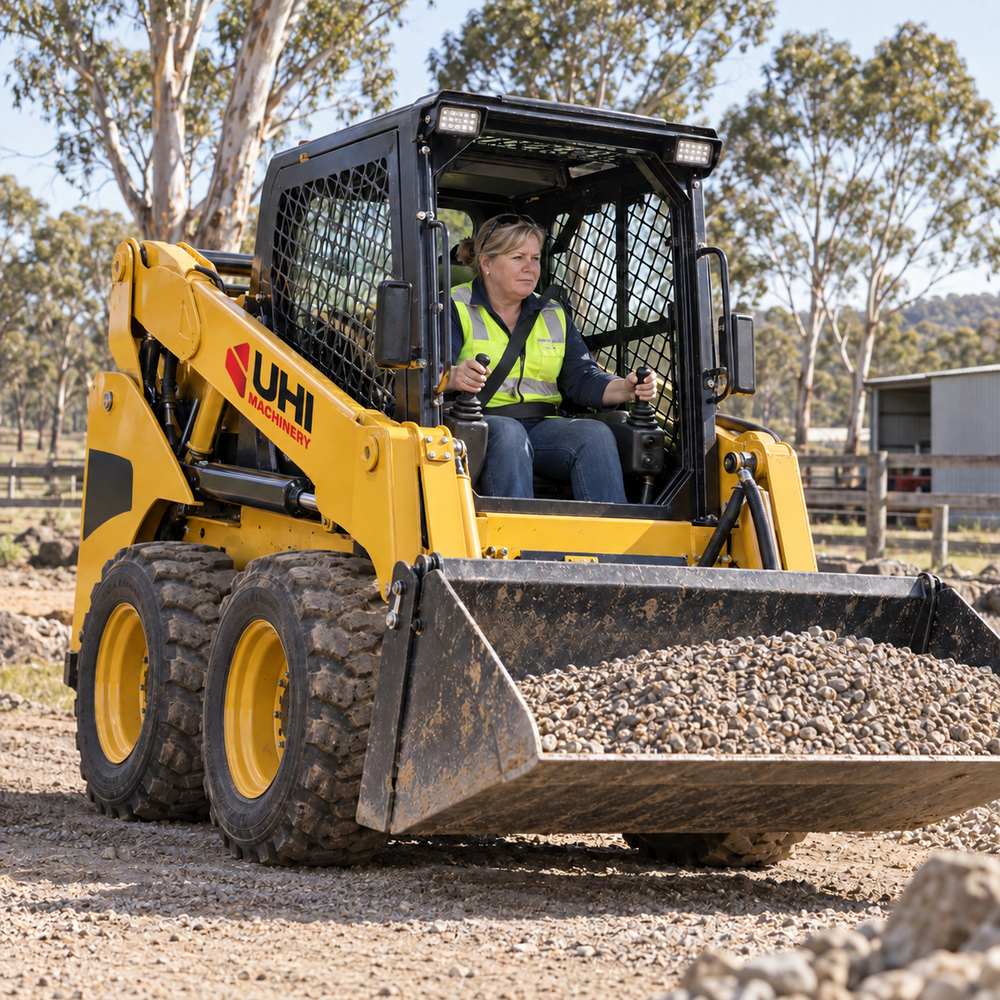
Wheeled machines generally suit hard surfaces such as concrete, asphalt, warehouses and compacted yards.
- Faster travel speeds
- Lower maintenance costs
- Lower operating expenses
- Strong manoeuvrability
Compact Track Loader
Tracks may be worth considering when work regularly involves soft, wet or less stable ground.
- Better traction
- Lower ground pressure
- Improved flotation
- Increased stability
If your regular work involves mud, soft ground, sand, steep slopes or wet conditions, the benefits of a tracked machine may outweigh the additional undercarriage costs.
Understand Radial vs Vertical Lift
Skid steer loaders commonly use either a radial lift path or a vertical lift path. The better option depends on where in the lift cycle you need the machine to perform.
Digging, Grading & Pushing
Radial lift machines are well suited to work performed closer to ground level, including digging, grading and pushing material.
- Ground-level digging
- Grading
- Pushing material
- General site work
Loading, Pallets & Stacking
Vertical lift machines are designed to provide greater forward reach at higher lift positions.
- Truck loading
- Pallet handling
- Material stacking
- High lift-point applications
Think Beyond the Bucket
One of the biggest advantages of a skid steer loader is the ability to change attachments and use one machine for multiple jobs.
Operator Comfort Can Improve Productivity
Operators may spend hundreds or even thousands of hours in the cab, so comfort and visibility should form part of the buying decision.
Cab & Climate
Consider an enclosed air-conditioned cab where long working hours and Australian weather make climate control important.
Seat & Controls
Suspension seating and ergonomic joystick controls can help reduce fatigue during long shifts.
Visibility
Assess forward, side and rear visibility, including available cameras and work lighting.
Service Access
Easy access to routine service points can simplify daily checks and scheduled maintenance.
Compare Support and Total Cost of Ownership
Purchase price is only one part of the investment. Parts availability, maintenance, transport and downtime all affect long-term value.
Dealer & Service Support
Before purchasing, ask how the machine will be supported throughout its working life.
- Are spare parts stocked locally?
- How quickly can service support respond?
- What warranty is included?
- Is technical support readily available?
- Does the dealer support commercial customers?
Total Ownership Cost
Compare more than the initial purchase price.
- Fuel consumption
- Routine servicing
- Filters and hydraulic oil
- Tyres or tracks
- Wear parts
- Attachment maintenance
- Transport costs
- Expected resale value
Plan for Future Work
Many businesses begin with one core application and expand into new work as customers, projects or farm requirements change.
Hydraulic Capacity
Additional hydraulic capability may provide more flexibility if you plan to use more demanding attachments later.
Lifting Capacity
Consider whether future pallet, loading or material-handling work may require greater operating capacity.
Attachment Compatibility
A versatile attachment interface can help the machine take on a wider range of jobs as your workload changes.
What Should You Compare Before Buying?
The best skid steer is the machine that matches your actual work, operating environment and long-term requirements.
Choose the Skid Steer Around the Work
The best skid steer loader is not automatically the newest model or the machine with the highest specification.
It is the machine that best matches your workload, site conditions, attachment requirements and long-term business goals.
Whether you are maintaining acreage, operating a landscaping business, managing construction projects or supporting agricultural work, taking the time to compare the complete machine can help you make a more practical investment decision.
Skid Steer Buying FAQs
What size skid steer loader is best for Australian farms?
For many mixed farming applications, a medium-sized skid steer with useful lifting capacity and auxiliary hydraulics can provide a good balance between versatility and operating cost.
Is high-flow hydraulics necessary?
Not always. Higher-flow hydraulics become more relevant when regularly operating demanding attachments such as mulchers, stump grinders or other high-demand hydraulic tools.
Should I choose wheels or tracks?
Wheels generally suit hard surfaces and can reduce undercarriage operating costs, while tracks provide better traction and flotation on soft, sandy or muddy ground.
Which attachments offer the best return on investment?
Many owners start with frequently used attachments such as a 4-in-1 bucket and pallet forks, then add augers, grapples or trenchers as their workload expands.
How important is local dealer support?
Access to spare parts, warranty support and experienced service technicians can reduce downtime and contribute to long-term ownership value.
Find the Right UHI Skid Steer for Your Work
Tell the UHI Machinery team about your workload, site conditions, lifting requirements and attachments. We can help you compare skid steer options and choose a machine that better matches your application.