Wheel Loader Safety Tips & Operating Guide for Beginners
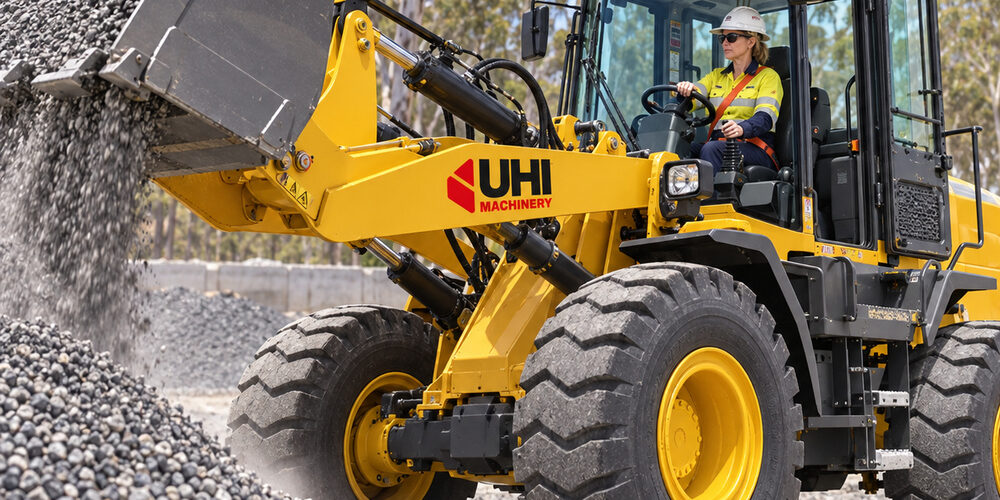
Safe wheel loader operation starts with good habits. From pre-start inspections and correct PPE to bucket position, loading technique, articulation awareness, slopes and daily maintenance, this beginner guide covers practical operating advice for safer and more efficient work.
Browse UHI Wheel LoadersWhat Should a New Wheel Loader Operator Remember?
Inspect the machine before starting, wear the right PPE, keep the bucket low while travelling, operate smoothly and stay aware of the loader's articulation area and blind spots.
Wheel loaders are used across Australian construction, agriculture, mining and landscaping because they can move large volumes of material efficiently.
For new operators, however, productivity should never come at the expense of safety.
Learning correct operating techniques can help reduce workplace risk, improve fuel efficiency, minimise unnecessary machine wear and support a longer equipment life.
Begin Every Day With a Pre-Start Inspection
A consistent walk-around inspection can help identify problems before they lead to repairs or unexpected downtime.
Check Fluids, Tyres and Loader Components
- Engine oil level
- Hydraulic oil
- Coolant
- Fuel level
- Tyre condition and pressure
- Bucket cutting edge
- Hydraulic hoses
- Articulation joint
Check Safety and Visibility Systems
- Lights and warning indicators
- Mirrors and cameras
- Horn
- Reversing alarm
- Service brakes
- Park brake
Always Wear Appropriate PPE
Personal Protective Equipment should match the site, task and workplace requirements.
Learn the Controls Before Operating
Practise basic movements in a safe open area before entering an active worksite.
Steering & Travel
Become familiar with steering, forward and reverse travel, transmission controls and the parking brake.
Bucket Controls
Practise bucket lift and tilt movements until they can be performed smoothly and predictably.
Hydraulic Functions
Understand the loader's hydraulic functions and differential lock, where equipped, before productive work begins.
Keep the Bucket Low While Travelling
Carrying the bucket too high is a common beginner mistake and can reduce stability and visibility.
Keep the Load Close to the Ground
- Keep the bucket low while travelling
- Tilt it slightly back to retain material
- Raise it only when approaching the dump point
Why Bucket Height Matters
A lower load position improves visibility and helps keep the machine's centre of gravity lower.
This becomes especially important when travelling on uneven ground or changing direction.
Load the Bucket Efficiently
Smooth loading technique can improve productivity while reducing tyre wear and drivetrain stress.
Approach Straight
Enter the material pile in a straight line with the bucket positioned correctly.
Use Steady Pressure
Apply steady forward pressure and avoid unnecessary wheel spin.
Combine Lift and Curl
Curl the bucket while lifting and allow the hydraulic system to do the work.
Avoid Sharp Turns With a Raised Load
Wheel loaders become less stable when carrying a heavy load high in the lift cycle.
Slow Before Turning
Reduce speed before changing direction, especially on uneven surfaces.
Keep the Load Low
Maintain a low bucket position whenever practical while travelling.
Avoid Sudden Steering
Smooth steering reduces stability changes and unnecessary stress on the articulation joint.
Watch the Articulation Area
Wheel loaders steer through a central articulation joint, creating a significant pinch area between the front and rear frames.
Keep People Clear
Never allow people to stand close to the articulation area while the machine is operating.
Remember the Rear of the Machine
The rear section changes position as the loader turns, so remain aware of surrounding objects and people in confined areas.
Be Aware of Blind Spots
Good cab visibility does not eliminate blind spots around a wheel loader.
Operate Carefully on Slopes
Uneven terrain and slopes require additional care because machine stability can change quickly.
Maintain a Stable Travel Direction
- Travel straight up or down slopes where practical
- Avoid unnecessary travel across steep side slopes
- Keep the bucket low
Reduce Sudden Movements
- Reduce travel speed
- Avoid sudden braking
- Avoid abrupt steering
- Do not overload the bucket on steep terrain
Understand the Machine's Lifting Capacity
Every wheel loader has operating limits. Oversized loads can affect steering, braking and overall stability.
Know the Rated Capacity
Understand the loader's rated operating limits before lifting or carrying heavy material.
Distribute Material Evenly
Avoid poorly balanced loads and keep material distributed appropriately inside the bucket.
Use Forks Correctly
Use compatible pallet forks and follow the machine and attachment requirements when handling palletised loads.
Minimise Unnecessary Idle Time
Excessive idling adds fuel consumption and engine hours without adding productivity.
Plan Loading Cycles
Reduce delays by planning the movement of the loader, trucks and material.
Minimise Waiting
Avoid extended periods of running the machine when no productive work is being completed.
Use Steady Engine Speed
Smooth and consistent operation is generally preferable to repeated aggressive acceleration.
Respect Daily Wheel Loader Maintenance
Small maintenance tasks performed consistently can reduce unexpected breakdowns and support machine reliability.
Grease and Inspect
- Grease loader pins
- Inspect hydraulic cylinders
- Check tyre condition
- Remove debris from the articulation area
Keep the Cooling System Clean
- Clean the radiator
- Clean the cooling package
- Monitor fluid levels
- Follow the manufacturer's service schedule
Common Wheel Loader Operating Mistakes to Avoid
Improve Productivity Through Smooth Operation
Experienced wheel loader operators usually focus on efficient work cycles rather than simply trying to move faster.
Approach the Pile Squarely
A straight approach can help create a more efficient and controlled loading cycle.
Combine Lift and Curl
Coordinating loader functions can improve bucket filling and reduce unnecessary machine movement.
Plan Travel Routes
Reduce unnecessary reversing and empty travel distance where practical.
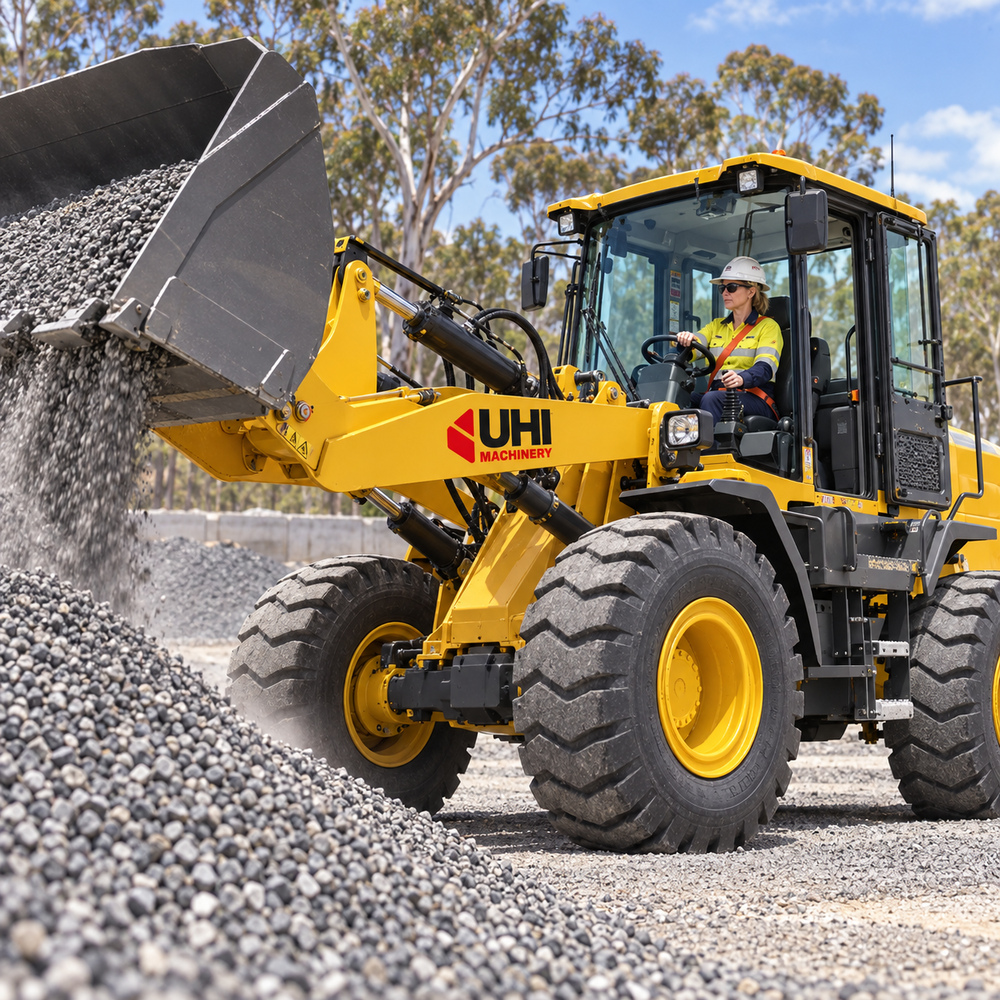
Safe Wheel Loader Operation Is About Control, Not Speed
Learning to operate a wheel loader safely takes practice, attention and consistent operating habits.
The most productive operators are not necessarily the fastest. They maintain awareness of their surroundings, keep the machine stable and use smooth controls throughout the loading cycle.
Pre-start inspections, correct bucket positioning, safe lifting habits, good articulation awareness and routine maintenance can help beginners build confidence while protecting both the machine and the people around it.
Wheel Loader Operating FAQs for Beginners
Is a wheel loader difficult to learn?
Modern wheel loaders commonly use intuitive controls. Practising slowly in an open area can help a new operator become familiar with steering, travel and bucket functions before working on an active site.
What is the safest bucket height while travelling?
The bucket should generally remain low to the ground and slightly tilted back while travelling. This helps improve visibility and machine stability.
Should beginners use full throttle?
Not necessarily. Smooth operation at an appropriate engine speed can be more productive than aggressive acceleration.
How often should wheel loader pins be greased?
Loader linkage pins may require daily greasing during regular or heavy use. Always follow the maintenance schedule provided by the machine manufacturer.
What causes excessive wheel loader tyre wear?
Common causes include sharp turns, excessive wheel spin, overloaded buckets and operation on unsuitable surfaces.
Explore UHI Wheel Loaders for Australian Worksites
Compare UHI wheel loaders for construction, agriculture, landscaping and material-handling applications, and speak with the UHI Machinery team about a machine and attachment setup suited to your work.