
Excavator Safety Tips & Operating Guide for Beginners
Safe excavator operation starts with good habits. From daily inspections and correct PPE to machine positioning, lifting, slope travel and attachment use, this beginner guide covers practical techniques that can help operators work more safely and efficiently.
Browse UHI ExcavatorsWhat Should a New Excavator Operator Remember?
Start with the machine inspection, understand the controls, work smoothly, maintain a stable working position and remain aware of the people and hazards around the machine.
Operating an excavator may look straightforward, but safe and efficient operation requires knowledge, practice and consistent habits.
Whether you are learning on a mini excavator for a farm, landscaping business or construction site, understanding basic operating techniques can improve productivity while reducing unnecessary machine wear and potential safety risks.
Modern excavators are powerful and precise, but they should always be operated responsibly and within the manufacturer's recommended limits.
Start With a Thorough Pre-Operation Inspection
A short daily walk-around can identify problems before they become expensive downtime.
Check Fluids and Machine Condition
- Engine oil
- Hydraulic oil level
- Coolant
- Fuel level
- Track condition
- Hydraulic hoses
Check Attachments and Safety Items
- Bucket pins
- Lights
- Mirrors
- Safety decals
- Quick hitch locking system
- Attachment security
Always Wear the Correct Safety Equipment
PPE remains a basic part of safe machine operation and should suit the site and task being performed.
Understand the Controls Before Digging
New operators should spend time learning the machine in a safe open area before beginning productive excavation.
Boom, Arm & Bucket
Practise boom movement, arm extension and bucket curl using slow, controlled joystick inputs.
Slew & Travel
Become familiar with slewing, blade operation and the travel controls before working around obstacles.
Auxiliary Hydraulics
Understand how auxiliary hydraulic functions operate before using hydraulic attachments.
Work Slowly Until You Build Confidence
Experienced operators usually work smoothly rather than relying on sudden or aggressive control movements.
Plan Each Movement
Think about the next digging, lifting or repositioning movement before making it.
Keep the Machine Balanced
Avoid abrupt inputs that can make the machine less stable or increase wear.
Reduce Repositioning
Plan the digging cycle to avoid unnecessary travel, slewing and repeated setup changes.
Position the Excavator Correctly
Machine positioning affects both digging efficiency and stability.
Build a Stable Working Platform
- Work on level ground where practical
- Position the dozer blade correctly
- Maintain a stable machine base
- Consider trench edges and ground condition
Move Closer Instead of Overreaching
Excessive boom reach can reduce digging efficiency and place unnecessary stress on the machine.
Reposition the excavator closer to the work area when required.
Avoid Overloading the Machine
Every excavator has designed lifting limits. Exceeding them may affect machine stability and increase tipping risk.
Before Lifting
- Check lifting charts
- Understand machine capacity
- Use approved lifting points when required
- Follow manufacturer recommendations
While Carrying a Load
- Keep loads low while travelling
- Lift smoothly
- Avoid rapid slewing with heavy loads
- Maintain a stable travel path
Watch the Swing Area and Keep People Clear
The upper structure and attachment can move through a large working radius, so awareness of people and obstacles is essential.
Check Before Slewing
Check mirrors, look around the machine and confirm there is enough clearance before rotating.
Create an Exclusion Zone
Keep workers, visitors, children and pedestrians outside the machine's working radius unless appropriate controls are in place.
Use Clear Communication
Good communication between the operator and ground personnel helps reduce risk on busy worksites.
Be Aware of Underground Services
Never assume the ground is clear simply because there are no visible services above it.
Possible Underground Hazards
- Electrical cables
- Water mains
- Gas lines
- Fibre optic communications
- Sewer systems
- Irrigation infrastructure
Confirm Before Digging
Use available service plans, locating services and the relevant local requirements before excavation begins.
Stop and reassess if there is uncertainty about underground services.
Maintain Good Visibility
Travel Carefully on Slopes
Slopes require additional care because machine stability can change quickly with direction, speed and attachment position.
Reduce Instability
- Travel straight up or down slopes where practical
- Avoid steep side-slope travel
- Keep attachments low
Keep Movements Controlled
- Reduce travel speed
- Avoid sudden steering movements
- Maintain a low centre of gravity
Use Excavator Attachments Correctly
Different attachments place different demands on the excavator's hydraulic system and should be installed and configured correctly.
Develop Smooth Operating Habits
Skilled excavator operation is usually about efficiency rather than speed.
Combine Movements
Coordinate boom, arm and bucket movements rather than operating each function independently.
Plan the Digging Cycle
Reduce unnecessary slewing and repeated repositioning by planning where each load will go.
Stay Consistent
Smooth operation and consistent engine speed can help reduce fuel consumption and machine wear.
Respect Daily Excavator Maintenance
Routine maintenance is one of the simplest ways to support reliability and machine life.
Daily Maintenance Tasks
- Grease pivot pins
- Clean radiators
- Remove debris
- Inspect hydraulic hoses
Check Tracks and Fluids
- Check track tension
- Monitor fluid levels
- Look for leaks or damage
- Follow the operator manual
Common Excavator Operating Mistakes to Avoid
Safe Excavator Operation Is Built on Good Habits
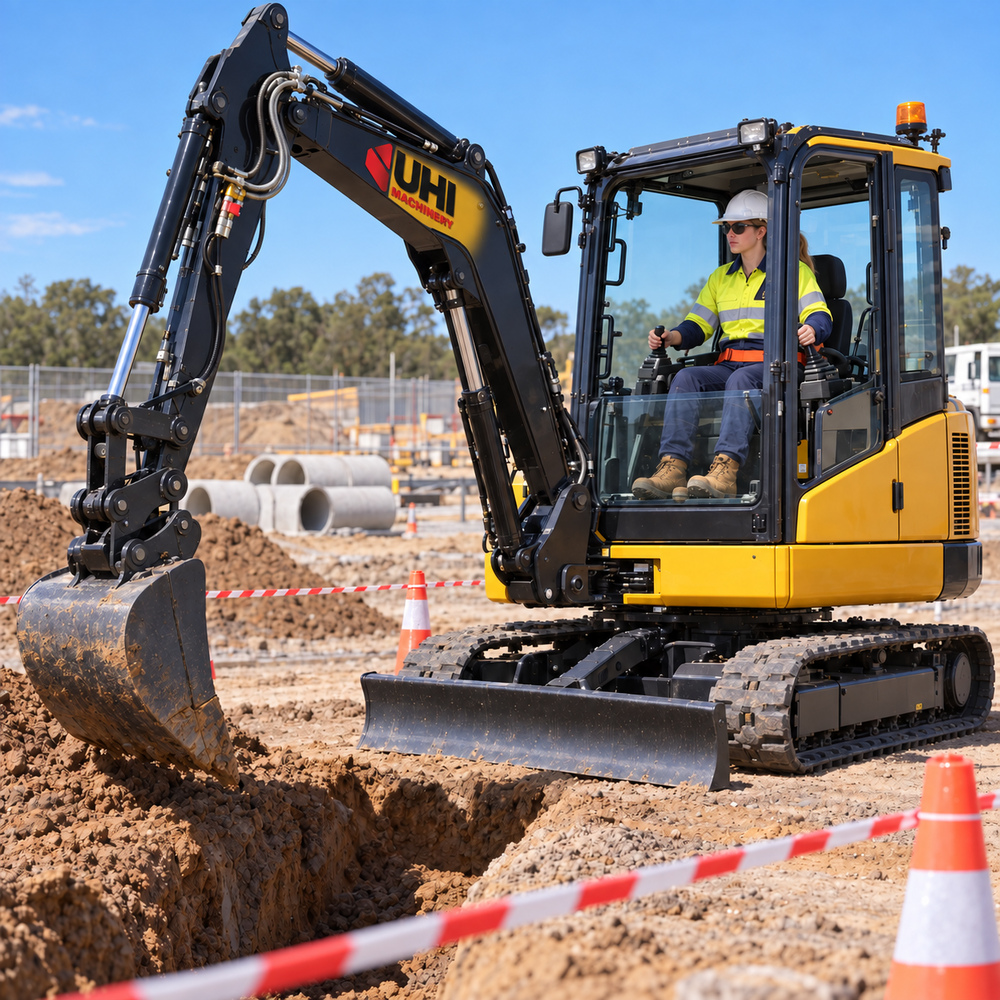
Learning to operate an excavator is a gradual process based on patience, machine awareness and consistent operating technique.
Daily inspections, smooth controls, correct positioning, awareness of the surrounding work area and respect for machine limits can help new operators improve both safety and productivity.
Whether the excavator is being used for drainage, landscaping, construction or rural property maintenance, responsible operation also helps protect the machine and support a longer working life.
Excavator Operating FAQs for Beginners
Is a mini excavator difficult to learn?
Modern mini excavators commonly use intuitive joystick controls. Practising basic movements slowly in a safe environment can help new operators become familiar with digging and material-handling functions.
Should beginners operate an excavator at full engine speed?
Not necessarily. Beginners may benefit from moderate engine speeds while learning smooth and accurate control movements.
How often should an excavator be greased?
Daily greasing of pivot points may be appropriate during regular or heavy use. Always follow the maintenance schedule specified in the machine's operator manual.
What is a common mistake made by beginner excavator operators?
Overreaching instead of repositioning the excavator is a common beginner habit. Moving the machine closer to the work can improve efficiency and stability.
How can I improve my excavator operating skills?
Practise smooth coordinated movements, perform regular inspections, understand the machine's capabilities and continue learning from experienced operators and the manufacturer's operating information.
Explore UHI Excavators for Australian Worksites
Compare UHI excavators for landscaping, farms, property maintenance and construction applications, and speak with the UHI Machinery team about a machine and attachment setup suited to your work.