What Size Wheel Loader Do I Need?
Choosing the right wheel loader size depends on more than bucket capacity. Material type, loading volume, site access, transport, travel distance and attachment requirements all influence which loader is the best fit for your work.
Browse UHI Wheel LoadersWhat Wheel Loader Size Should I Choose?
Bucket capacity provides a useful starting point when comparing wheel loader sizes, but the actual material, site and workload should always be considered alongside it.
| Wheel Loader Size | Typical Bucket Capacity | Where It May Fit Best |
|---|---|---|
| Compact Wheel Loader | Under 1.0 m³ | Restricted access, landscaping, smaller construction projects, lighter material movement and jobs where transportability matters |
| Medium Wheel Loader | 1.0–2.5 m³ | General construction, regular loading, carrying, grading and higher material volumes |
| Large Wheel Loader | Above 2.5 m³ | High-volume material movement and applications requiring substantially greater capacity |
The right wheel loader is the machine that can move the required material efficiently while still fitting the physical limits of your worksite.
A loader that is too small may require more cycles to complete the job. A machine that is larger than necessary may create access, transport or storage problems.
Instead of choosing on bucket size alone, work through the material, main task, site constraints and attachment requirements together.
What Material Will the Loader Handle?
Material weight and bulk should be considered separately because the same bucket volume can create very different machine loads.
Lighter Materials
Materials such as soil and mulch may allow you to work towards the smaller end of a loader size class, depending on the job and bucket configuration.
- Soil
- Mulch
- Other lower-density loose materials
Heavier Materials
Heavier material generally requires more careful consideration of machine capacity, operating weight and the load being carried.
- Gravel
- Stone
- Dense aggregate
What Is the Loader's Main Task?
A wheel loader may dig, load, carry and grade, but the task that dominates your working day should influence the machine size you choose.
Digging & Loading
Bucket volume directly influences how much material can be moved per loading cycle. Truck loading should also be matched to the size of the trucks and expected daily production.
Carrying Around the Site
If material needs to travel after loading, consider the actual weight and bulk of each load rather than focusing only on nominal bucket volume.
Grading & General Site Work
Manoeuvrability can become more important when the loader also spends time grading, repositioning material or working around a busy site.
How Much Bucket Capacity Do You Actually Need?
The bucket is often the most frequently used wheel loader attachment, but extra capacity is only useful when it suits the rest of the job.
Compact Applications
Suitable where working room, transportability and compact dimensions matter more than maximum volume per cycle.
Medium Applications
A useful middle ground for general construction, regular loading, carrying and other commercial applications.
Higher-Volume Applications
Larger bucket capacities become more relevant where material volume is high and site access allows a larger machine to work efficiently.
Measure the Site Before You Choose the Machine
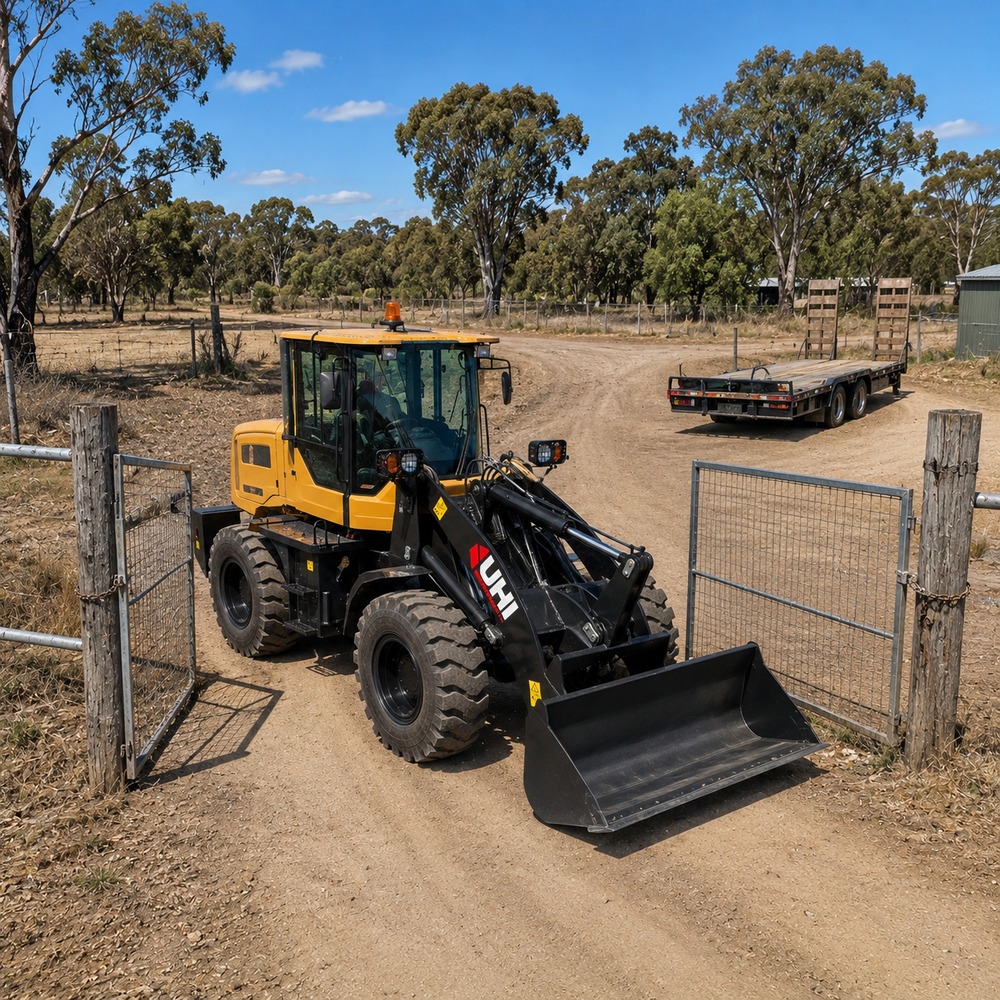
A loader may look ideal on paper but still be unsuitable if it cannot access the work area, fit inside storage or move comfortably around the site.
Width
Measure gates, entrances, shed doors and working lanes before selecting a loader.
Height
Check machine height against buildings, storage areas and any overhead clearance limitations.
Wheelbase & Working Room
Include wheelbase and turning requirements when assessing whether the machine can work efficiently in the available space.
Include Transport in the Sizing Decision
Transport requirements become especially important when a wheel loader regularly moves between projects.
Check the Transport Setup
- Machine height
- Machine operating weight
- Trailer dimensions and capacity
- Tow vehicle requirements
- Destination access
Compact Loaders Can Be Easier to Relocate
Lower overall height and weight can make compact wheel loaders more practical where regular relocation, access restrictions or storage limits are important.
Always confirm the actual transport requirements for the selected machine and your towing setup before purchase.
Allow for Travel Across the Work Area
Travel speed can make a significant difference when the loader moves material repeatedly across a larger site.
Short Loading Cycles
When the loader works close to the pile, truck or hopper, bucket capacity and manoeuvrability may matter more than outright travel speed.
Longer Load-and-Carry Cycles
Where the loader repeatedly crosses a larger jobsite, efficient travel can reduce cycle times and support higher productivity over the day.
Select Attachments Alongside the Loader
Attachments determine what the wheel loader can do, so assess the loader and attachment as one complete working setup.
GP Bucket
Suitable for common loose-material loading, carrying and stockpiling applications.
4-in-1 Bucket
Adds grabbing, pushing and levelling capability where more attachment versatility is required.
Forks
Allow the wheel loader to lift and transport suitable loads where fork work forms part of the regular workload.
Which Way Should You Lean?
For many buyers, the real decision is whether the flexibility of a compact loader outweighs the extra capacity of a medium machine.
Access and Transport Matter Most
- You work around tighter sites
- Storage space is limited
- Transport between jobs is frequent
- Lower machine height matters
- Lower operating weight is useful
- Landscaping and lighter construction form the core workload
Material Volume and Loading Matter Most
- You move greater material volumes
- Heavier carrying duties are common
- Truck loading is a regular task
- Higher bucket capacity is important
- You still need reasonable manoeuvrability
- The site has enough room for a larger machine
5 Things to Confirm Before Choosing Your Loader
Use these five points together rather than selecting a wheel loader on one specification alone.
Choose the Loader Around the Job
Wheel loader size should be based on what the machine needs to move, where it needs to work and how often it needs to travel.
Compact wheel loaders are worth considering when access, transport and storage limit machine size. Medium loaders become more relevant when greater material volumes, heavier carrying duties or regular truck loading form the core workload.
The final decision should consider bucket capacity, material density, machine dimensions, travel requirements and attachments together.
Find the Right UHI Wheel Loader Size
Tell the UHI Machinery team what material you move, your bucket requirements, site access, transport setup and attachments. We can help you compare wheel loader options and build a configuration around your work.