Mini Excavator vs Skid Steer: Which One Is Better?
Mini excavators and skid steer loaders are both compact, versatile machines, but they are designed for different types of work. Compare digging, loading, attachments, manoeuvrability, terrain and productivity to decide which machine better suits your project.
Explore UHI ExcavatorsMini Excavator vs Skid Steer
If digging and trenching are your main tasks, a mini excavator is usually the stronger choice. If loading, carrying and moving material dominate your workload, a skid steer will generally be more productive.
| Feature | Mini Excavator | Skid Steer Loader |
|---|---|---|
| Main Purpose | Digging and excavation | Loading and material handling |
| Digging Depth | Excellent | Limited compared with an excavator |
| Trenching | Excellent | Suitable for lighter attachment-based trenching |
| Loading & Carrying | Moderate | Excellent |
| Material Handling | Suitable for selected tasks | Designed for frequent material handling |
| 360° Upper Rotation | Yes | No |
| Travel Speed | Generally slower | Generally faster |
| Attachment Versatility | High | Very high |
| Tight-Space Work | Excellent | Very good |
| Best Suited To | Digging, trenching, drainage and excavation | Loading, grading, site cleanup and material movement |
What Is the Difference Between a Mini Excavator and a Skid Steer?
Both machines are compact and versatile, but their design gives them very different strengths on the job site.
What Is a Mini Excavator?
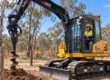
A mini excavator is a compact tracked machine designed primarily for digging, trenching, lifting and precision earthmoving.
Its boom, arm and bucket can work below ground level, while the rotating upper structure allows the operator to dig on one side and place material on another without repositioning the whole machine.
- Drainage trenches
- Plumbing and electrical trenches
- Footings and foundations
- Landscaping
- Retaining walls
- Tree and post holes
- Root and stump removal
- Work near buildings and fences
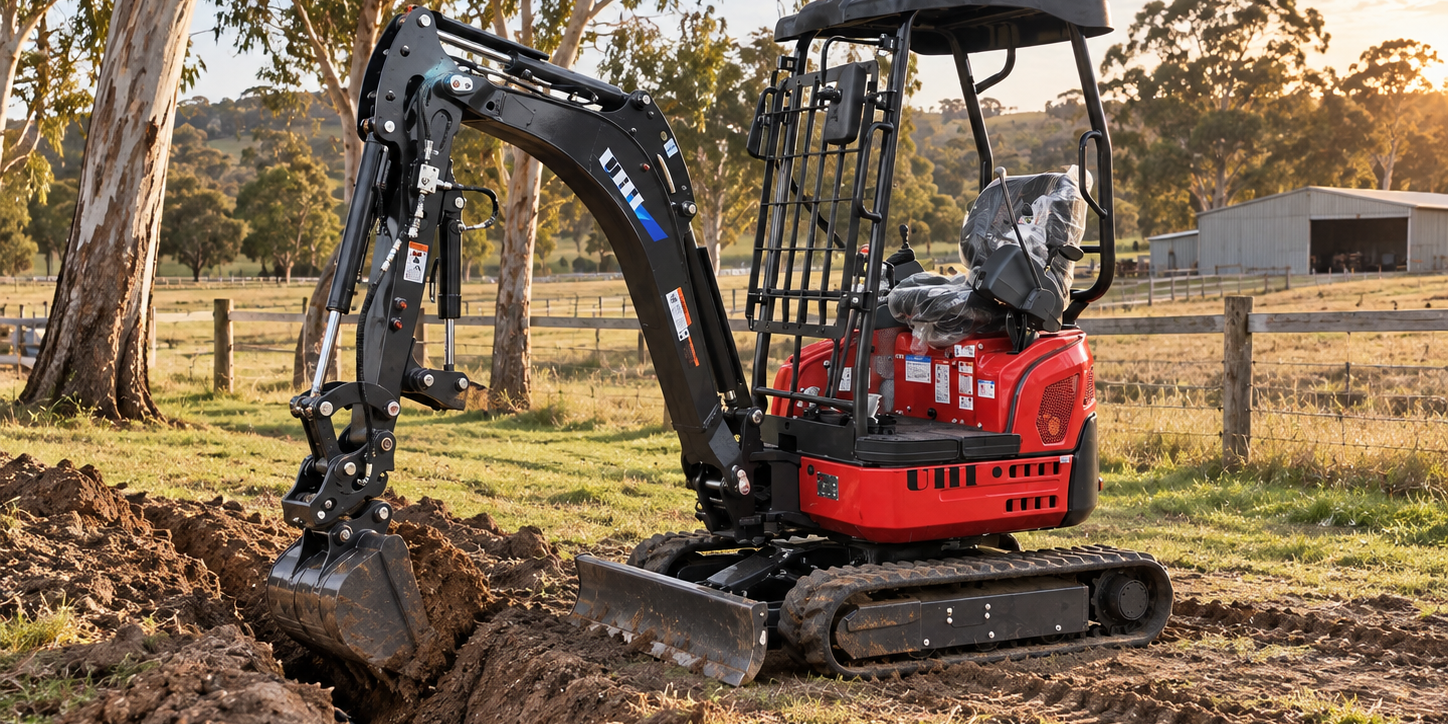
UHI UME18 Mini Excavator
The UME18 combines a compact 1.8-ton operating size with a Kubota engine, expandable tracks, two-speed travel and multiple attachments.
View UME18 Details →Explore More UHI Excavators
Compare compact machines including UME06, UME10, UME12, UME18, XE20 and larger excavator models.
Browse UHI Excavator Range →What Is a Skid Steer Loader?
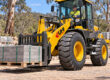
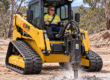
A skid steer is a compact and highly manoeuvrable loader designed for lifting, loading, carrying, pushing and moving materials.
Front-mounted lift arms allow the machine to operate a wide range of attachments and efficiently move materials around a worksite.
- Loading soil and gravel
- Moving mulch and materials
- Backfilling trenches
- Levelling and grading
- Site cleanup
- Carrying pallets
- Vegetation clearing
- Farm and construction work
UHI CDM308 Skid Steer
The CDM308 combines a 48HP Kubota engine, 899kg rated load, air- conditioned ROPS/FOPS cabin and 4-in-1 bucket for material handling, site preparation and construction applications.
View CDM308 Details →Explore UHI Skid Steers
Compare wheeled and tracked skid steer options for loading, earthmoving, landscaping and material handling.
Browse UHI Skid Steers →Which Machine Performs Better?
The winner changes depending on the type of work being performed.
Digging and Trenching
If digging is a regular part of your work, a mini excavator is generally the stronger option. Its purpose-built boom, arm and bucket provide greater digging depth, reach and precision below ground level.
- Drainage trenches
- Water and electrical services
- Footings
- Foundation excavation
- Post holes
- Landscaping excavation
Loading and Material Handling
A skid steer is generally better when the main job is moving materials. Front-mounted lift arms are designed for frequent loading, carrying and placing operations.
- Loading trucks and trailers
- Moving soil and gravel
- Handling pallets
- Backfilling
- Moving materials across a property
- Repeated loading and unloading
Landscaping
Both machines are valuable for landscaping, but they perform different parts of the job.
Choose a Mini Excavator For:
- Digging ponds
- Installing drainage
- Excavating garden beds
- Building retaining walls
- Removing roots and stumps
- Working near structures
Choose a Skid Steer For:
- Moving soil and mulch
- Spreading gravel
- Levelling areas
- Loading materials
- Site cleanup
- Carrying landscaping supplies
Attachment Versatility
Both machines support multiple attachments, although skid steers are particularly well suited to frequent attachment changes across loading, grading and property-maintenance tasks.
Working in Tight Spaces
A skid steer can turn within a compact working area and move quickly around a site, while a mini excavator can remain in one position and use its rotating upper structure to dig and place material.
Swing-boom and zero-swing excavator designs can be particularly useful when working close to buildings, walls and fences.
Ground Conditions and Terrain
Tracked mini excavators distribute machine weight across a larger surface area and can perform well on softer or uneven ground.
Wheeled skid steers are generally well suited to firm surfaces where speed and manoeuvrability are important, while tracked skid steer loaders can provide better traction on challenging terrain.
Speed and Productivity
Skid steers generally travel faster and are efficient when moving repeatedly between different areas of a site.
Mini excavators usually travel more slowly, but their long reach and rotating upper structure allow substantial excavation work to be completed without frequently repositioning the machine.
Cost and Long-Term Value
There is no single answer. The better value is usually the machine that completes the majority of your regular tasks without requiring frequent equipment hire.
- Purchase price
- Frequency of use
- Fuel consumption
- Maintenance
- Attachment costs
- Transport requirements
- Expected resale value
Mini Excavator Attachments
Skid Steer Attachments
Can a Mini Excavator and Skid Steer Work Together?
Yes. Many contractors use both machines because their strengths complement each other. The excavator handles detailed digging while the skid steer manages material movement, backfilling and site preparation.
Excavation
The mini excavator digs the trench or excavates the required area.
Material Movement
The skid steer moves soil and other materials around the worksite.
Backfill & Grade
The skid steer assists with backfilling trenches and grading.
Finishing
The excavator completes detailed excavation or finishing work.
Mini Excavator vs Skid Steer: Pros and Cons
Mini Excavator
Pros
- Excellent digging and trenching capability
- Precise hydraulic control
- 360-degree upper-body rotation
- Works effectively from one position
- Good stability on uneven ground
- Suitable for narrow access
- Wide range of excavation attachments
Cons
- Slower travel speed
- Less efficient for frequent material transport
- Limited loading capability compared with a skid steer
- May require a suitable trailer for transport
Skid Steer Loader
Pros
- Excellent loading and material handling
- Fast travel speed
- Compact and highly manoeuvrable
- Wide attachment range
- Efficient for grading and site cleanup
- Suitable for repeated loading and carrying
Cons
- Limited digging depth compared with an excavator
- Wheeled models can have less traction on soft ground
- Different jobs may require attachment changes
- Less suited to detailed below-ground excavation
Mini Excavator or Skid Steer: Which Should You Choose?
There is no single winner because the two machines are designed for different jobs. Choose based on the work you perform most often.
When Digging Is the Priority
- Digging and trenching are your main tasks
- You need to work below ground level
- You regularly complete drainage projects
- You need precision around buildings and fences
- You work on uneven ground
- You want excavation-focused attachments
When Material Handling Is the Priority
- You need to move materials quickly
- Loading and carrying are regular tasks
- You use multiple attachments
- You regularly complete grading and site cleanup
- You mainly operate on firm, stable surfaces
- You need strong lifting and loading capability
Still Not Sure Which Machine Is Right for Your Project?
Consider the jobs you complete most often, your worksite access, ground conditions, required digging depth, lifting needs and preferred attachments. UHI can help you compare excavators and skid steer loaders for your application.