5 Things to Check Before Buying a Used Excavator
Buying a used excavator can reduce your upfront investment, but hidden mechanical problems, hydraulic wear or undercarriage repairs can quickly turn a bargain into an expensive mistake. Here are five essential things Australian buyers should check before purchasing a used excavator.
Compare New UHI ExcavatorsWhat Should You Check Before Buying?
Whether you're buying from a dealer, equipment auction or private seller, these five areas deserve careful attention before you commit.
Buying a used excavator can be a smart investment for homeowners, farmers, landscapers and contractors looking to reduce upfront costs.
However, purchasing a used machine always involves some level of risk. A lower purchase price can quickly lose its appeal if hidden mechanical problems, worn hydraulic components or an expensive undercarriage repair appears shortly after delivery.
Without a careful inspection, what seems like a bargain could end up costing thousands of dollars in unexpected repairs and downtime.
Taking the time to inspect the machine thoroughly is one of the best ways to protect your investment.
Check the Machine's History and Overall Condition
Your inspection should begin long before the engine is started. A machine's history can tell you a great deal about how it has been used and maintained.
Ask for Service and Maintenance Records
A well-maintained excavator should ideally have documented servicing, including engine oil changes, hydraulic filter replacements, coolant maintenance and scheduled inspections.
Ask the seller:
- Has the machine been serviced according to schedule?
- Are maintenance records available?
- Has the hydraulic system ever been repaired?
- Have any major components been replaced?
Verify Ownership and Machine Identification
Confirm that the serial number on the machine identification plate matches the available documentation.
Australian buyers should also consider completing a Personal Property Securities Register (PPSR) search to check whether the machine:
- Is subject to outstanding finance
- Has been reported stolen
- Has registered security interests
Don't Judge by the Hour Meter Alone
Fewer operating hours do not automatically mean a better machine. Compare the displayed hours with the excavator's overall physical condition.
Inspect wear around:
- Operator's seat
- Rubber pedals
- Control joysticks
- Cabin flooring
- Access steps
- Bucket pins and bushes
Inspect the General Appearance
Walk slowly around the machine before starting it.
- Fresh paint that may be covering repairs
- Uneven welding on the boom or stick
- Missing panels or guards
- Oil stains beneath the machine
- Excessive rust
- Broken lights or mirrors
- Cracked windows
Cosmetic wear is expected on used equipment. Structural damage, however, should never be ignored.
Inspect the Engine and Hydraulic System
The engine and hydraulic system are critical areas of any excavator. Repairs involving diesel engines, hydraulic pumps or swing components can be expensive, making this one of the most important parts of a used-machine inspection.
Start With a Cold Engine
Whenever possible, inspect the excavator before it has been started for the day. A cold start may reveal problems that become less obvious once the engine is warm.
The engine should:
- Start smoothly
- Idle consistently
- Respond quickly to throttle inputs
- Produce minimal smoke under normal operation
White Smoke
May indicate poor cold combustion or, in some cases, coolant entering the combustion chamber.
Blue Smoke
Can indicate engine oil is being burned due to internal engine wear.
Black Smoke
Can be associated with excessive fuel delivery, restricted airflow or injector issues.
Some smoke during a cold start can be normal. Persistent smoke during normal operation deserves further investigation.
Check for Fluid Leaks
Look Under the Machine
- Engine oil
- Hydraulic oil
- Diesel fuel
- Coolant
Check the Engine Compartment
- Hydraulic hoses
- Hose fittings
- Pumps
- Cylinders
- Radiator
- Cooling system
Test the Hydraulic Performance
Operate every hydraulic function throughout its full working range.
- Boom raise and lower
- Arm extension
- Bucket curl
- Swing left and right
- Blade operation, if fitted
- Auxiliary hydraulic circuits
Watch and listen for:
- Slow movements
- Jerky operation
- Delayed response
- Hydraulic chatter
- Unusual whining noises
Smooth, predictable and responsive. If one movement is noticeably slower than the others, further diagnosis may be worthwhile.
Don't Forget the Cooling System
Australian working conditions can place substantial stress on an excavator's cooling system, particularly during summer.
- Check that the radiator is clean
- Check cooling fins for dirt or debris
- Confirm coolant level
- Monitor operating temperature
- Check that the cooling fan operates normally
Examine the Undercarriage, Boom and Attachments
The excavator's undercarriage and digging structure experience significant stress during everyday operation. These components can also be expensive to repair or replace.
Inspect the Undercarriage Carefully
- Check track chains or rubber tracks for excessive wear or cracks
- Inspect rollers and idlers for uneven wear or leaks
- Check sprockets for pointed or hooked teeth
- Inspect track tension
- Check track frames for impact damage or bending
- Look for cuts, tears or exposed cords in rubber tracks
Some undercarriage wear is expected on a used excavator, but significant wear should be considered when assessing the purchase price and likely future maintenance costs.
Check the Main Digging Components
The boom, arm and bucket perform most of the excavator's digging and lifting work, so inspect these components carefully.
Examine Any Included Attachments
Multiple attachments can add significant value to a used excavator, but only when they are in usable condition and compatible with the machine.
Common attachments may include:
- General-purpose buckets
- Trenching buckets
- Hydraulic augers
- Hydraulic breakers
- Grabs
- Rippers
Confirm that each attachment:
- Fits the machine correctly
- Matches the required hydraulic flow
- Has no major structural damage
- Includes the required pins and hoses
Test the Excavator Before Purchasing
A machine that looks excellent while stationary can reveal hidden issues once it is actually put to work.
Test Hydraulic Functions
Test boom lifting, arm extension, bucket curl, swing, blade and auxiliary hydraulic functions throughout their full range.
Check Travel Performance
Drive forwards and backwards. Check whether both tracks travel at similar speeds and whether the machine tracks in a straight line.
Test the Swing System
Rotate the upper structure in both directions and check for smooth operation, excessive drift, grinding or knocking sounds.
Listen for Unusual Noises
Pay attention to hydraulic whining, metal knocking, abnormal rattles and unusual engine vibration.
Check Control Response
Controls should respond consistently without noticeable delays, hesitation or jerky movement.
Test Under Load
Whenever possible, operate the machine under realistic working conditions rather than testing only at idle.
If something does not look, sound or feel right during the test, consider arranging an independent inspection by an experienced mechanic before committing to the purchase.
Consider the Long-Term Cost of Ownership
The cheapest excavator is not necessarily the machine that provides the best long-term value.
Before making a final decision, consider the cost of keeping the excavator operational throughout your ownership period.
Parts Availability
Ask whether replacement parts are readily available in Australia and how long critical components typically take to arrive.
- Are genuine parts available?
- What are typical delivery times?
- Are suitable aftermarket parts available?
Dealer Support & Service
Reliable support can be just as important as the initial machine condition.
- Technical advice
- Spare parts support
- Service support
- Warranty options
- Ongoing maintenance assistance
Should You Buy Used or Consider a New Excavator?
A well-maintained used excavator can provide excellent value. But when the price difference between an older machine and a new excavator is relatively small, compare the complete ownership proposition.
Used Excavator
A quality used machine may provide lower upfront cost and strong value when its condition, maintenance history and price are right.
- Potentially lower purchase price
- May already include useful attachments
- Can offer strong value when well maintained
- Requires careful mechanical inspection
- Future repair costs should be considered
New Excavator
A new excavator may offer greater predictability during the early years of ownership.
- Manufacturer warranty
- Zero operating hours
- Latest safety features
- Potential improvements in fuel efficiency
- Lower early-life maintenance requirements
- Dealer and parts support
Comparing a Used Excavator With a New UHI Excavator?
If you're comparing used equipment with a new machine, consider more than the initial purchase price. Machine specifications, attachments, warranty coverage, parts availability and after-sales support can all affect long-term ownership value.
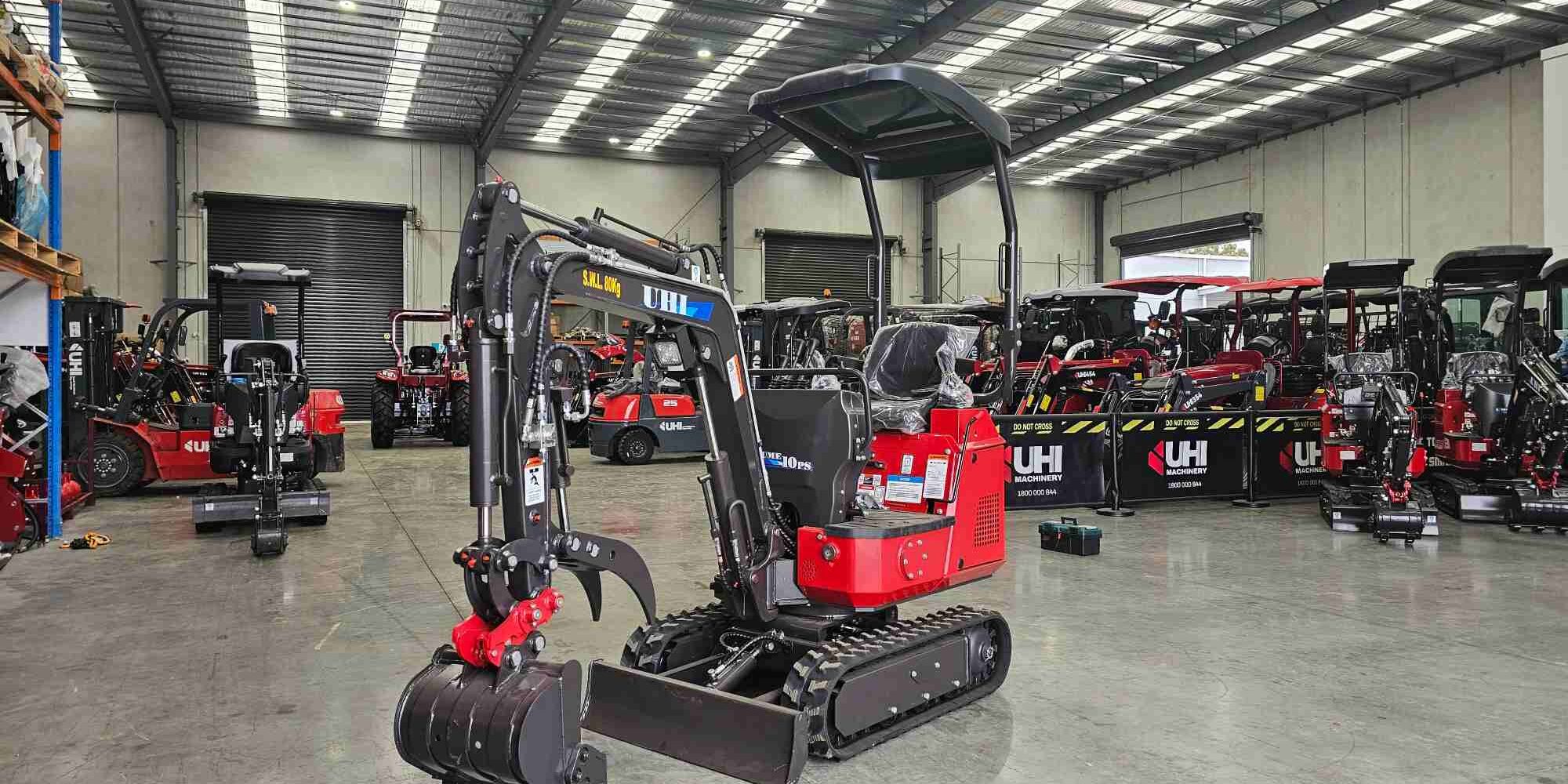
UHI offers a range of mini and compact excavators for Australian homeowners, farmers, landscapers and contractors, with options for different access requirements and project sizes.
Before You Buy a Used Excavator
Take the time to work through these five areas before signing an agreement.
Looking for an Excavator?
Whether you ultimately choose a quality used machine or decide a new excavator better suits your needs, compare the complete machine package and choose equipment that matches your work, budget and long-term requirements.