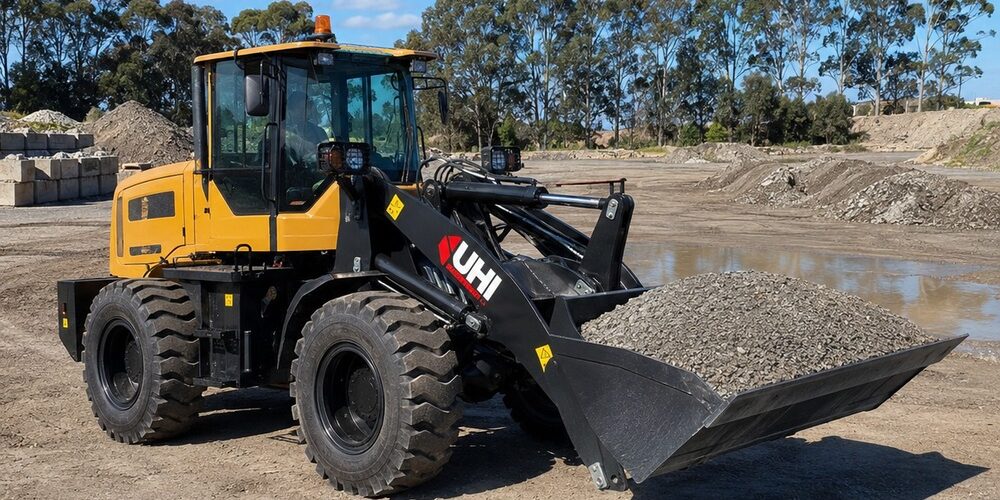
Choosing the Right Wheel Loader for Your Business
The right wheel loader depends on the work it performs every day. Compare applications, bucket capacity, operating weight, attachments, running costs, site conditions and operator comfort before selecting a machine for your business.
Browse UHI Wheel LoadersWhat Should You Look for in a Wheel Loader?
Instead of comparing wheel loaders on horsepower alone, consider how the machine will work across your actual site and loading cycle.
Wheel loaders work across construction, landscaping, agriculture, quarry and aggregate operations, waste and recycling, utilities and transport.
That variety is exactly why there is no single wheel loader that suits every business. A loader working in a narrow urban site may need very different characteristics from one moving material across rough, wet or steep ground.
The best starting point is to understand the work your loader performs most often and select the machine around that application.
Get a Clear Picture of Your Daily Work
Map out a typical working day or week before comparing models. Different loading cycles place very different demands on a wheel loader.
Truck Loading
Consider lift height, bucket capacity, cycle time and the size of the trucks being loaded.
Stockpiling
Reach, traction and manoeuvrability can influence how efficiently material is stacked and managed.
Load-and-Carry
Site distance, travel speed, ground condition and stability become important when material is moved repeatedly across a property.
Hopper Charging
Check lift height, visibility and bucket size against the equipment being fed.
Tight Access
Compact dimensions and turning ability matter around urban sites, sheds, landscaping projects and restricted entries.
Rough Terrain
Traction, stability and tyre choice become more important on steep, rocky, wet or uneven surfaces.
Read Wheel Loader Specifications as a Complete Set
Power, operating weight and bucket capacity are useful starting points, but they should be considered together rather than as isolated numbers.
How Much Material per Pass?
Bucket capacity gives an indication of how much material the loader can move in one cycle. The right bucket size depends on material density and the machine's overall configuration.
Stability and Machine Configuration
Operating weight helps explain the loader's overall size, stability and suitability for different loading applications.
Power Is One Part of the Picture
Engine output matters, but it should be considered alongside bucket capacity, tipping load, traction and intended application.
Match the Attachment to the Regular Job
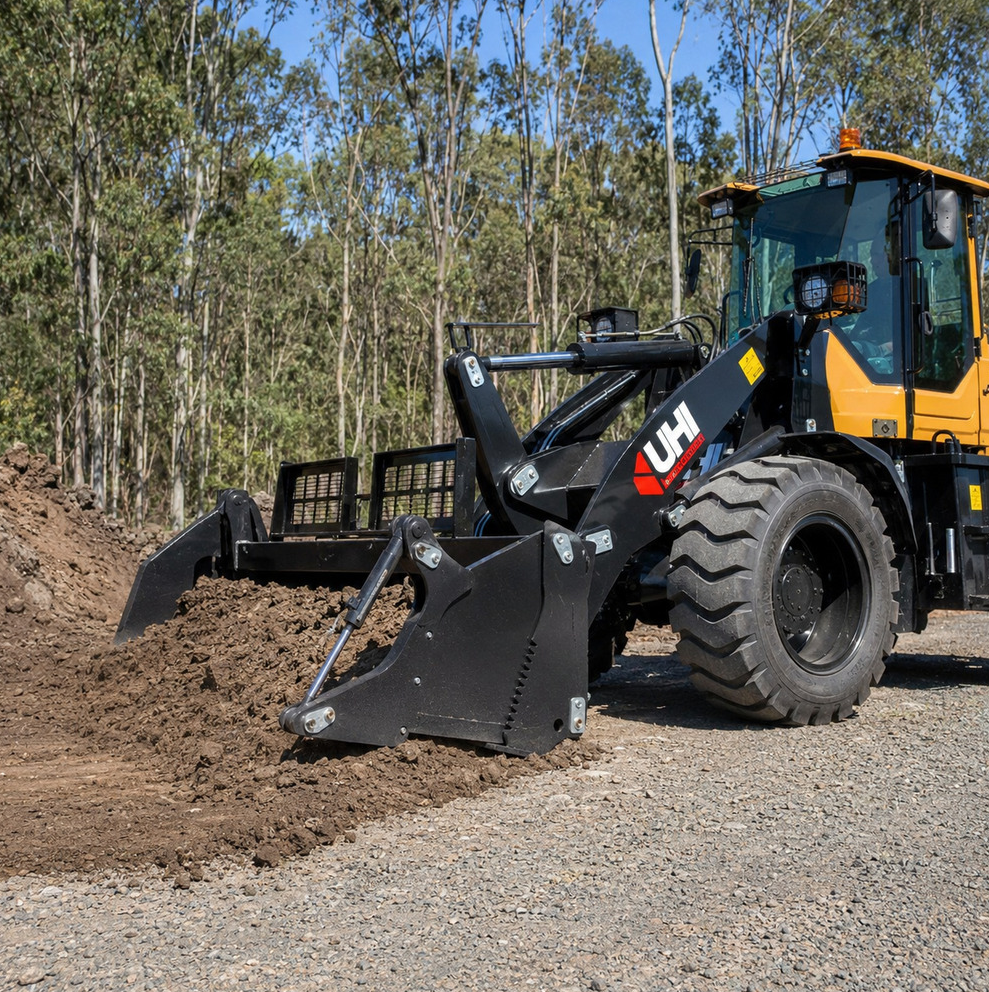
Changing the attachment changes what a wheel loader can do. The most useful attachment is usually the one that matches the work your machine performs most often.
GP Bucket
A general-purpose bucket is suitable for common loading, stockpiling and loose-material handling applications.
4-in-1 Bucket
Adds additional grabbing, pushing and levelling capability for businesses needing more versatility from one loader.
Forks
Fork attachments can expand the loader into pallet, material and suitable load-handling work.
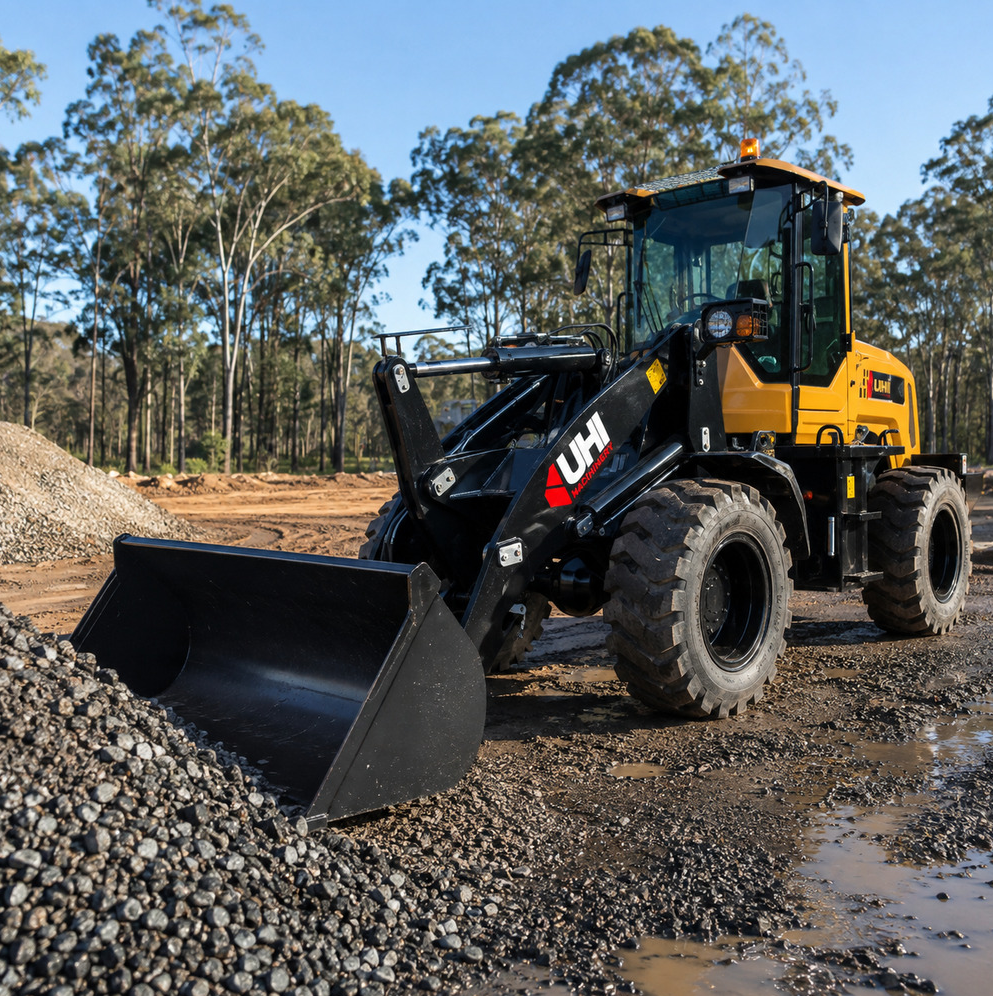
Count the Running Costs
A wheel loader's purchase price is only part of its total cost. Fuel use, tyre wear, reliability and everyday operating efficiency all affect the return the machine provides over time.
Fuel Use
Consider expected fuel consumption across the machine's actual daily loading cycle.
Tyre Wear
Wheel spin and unsuitable operating surfaces can increase tyre wear and operating costs.
Reliability
Unexpected downtime can affect productivity, labour scheduling and project completion.
Site Efficiency
A loader matched correctly to the pile, surface and material can make cleaner and more productive loading cycles.
Remember Who Sits in the Cab
The operator may spend an entire working shift in the machine, so cab design and comfort should be considered as productivity factors rather than optional extras.
Operator Comfort
- Seat comfort and adjustment
- Legroom
- Climate control
- Noise levels
- Easy access to controls
Visibility & Control
- Front bucket visibility
- Rear and side visibility
- Control layout
- Steering feel
- Loading response
Get Behind the Controls
A specification sheet can narrow down the shortlist, but it cannot tell you how a wheel loader feels in actual operation.
Check Visibility
Make sure the operator can clearly judge bucket position, site obstacles and working areas.
Test the Controls
Assess the control layout, steering response and loading functions under realistic use.
Check Manoeuvrability
Test the loader in the type of space and turning area it will regularly work in.
Evaluate Loading Response
Check how the loader approaches, fills, lifts and carries material through a normal work cycle.
5 Things to Check Before Choosing Your Wheel Loader
Use these five areas to compare machines based on your actual business requirements.
Choose a Wheel Loader Around the Job
The right wheel loader is the machine that suits your material, loading cycle, site conditions and operator.
A larger machine is not automatically more productive if it is poorly matched to site access, material type or the loading cycle. Likewise, choosing purely on purchase price can overlook long-term operating costs and productivity.
Compare the complete loader configuration, including capacity, attachments, tyres, operator environment and ongoing support before making your final decision.
Find the Right UHI Wheel Loader for Your Business
Tell the UHI team what material you move, how often you load, your site conditions and the attachments you need. We can help you compare wheel loader options and choose a configuration that better matches your business.